Head Terms vs Long-Tail Keywords: What’s the Difference?
Every online search begins with words. These phrases help search engines match users to relevant content. Broad terms like “running shoes” attract massive traffic but face fierce competition. Meanwhile, specific queries like “best cushioned trail runners for flat feet” target niche audiences ready to convert.
Modern SEO strategies blend these approaches. Short, popular phrases cast a wide net. Detailed queries address precise needs. Platforms like Botify’s keyword analysis tools reveal how balancing both types maximizes visibility across search engines.
Recent data shows 70% of searches now use multi-word phrases. This shift reflects how users ask detailed questions. Content creators must adapt by covering topics thoroughly while optimizing for varied search patterns.
Key Takeaways
- Broad phrases drive traffic volume; specific queries improve conversion rates
- Longer search phrases account for most online queries today
- Effective content answers both general and niche user needs
- SEO success requires analyzing intent behind search patterns
- Tools exist to track performance across keyword categories
This guide explores how to combine these keyword types strategically. You’ll learn to identify high-potential phrases and create content that ranks while meeting real user needs.
Defining Keyword Types: From Head Terms to Long-Tail Keywords
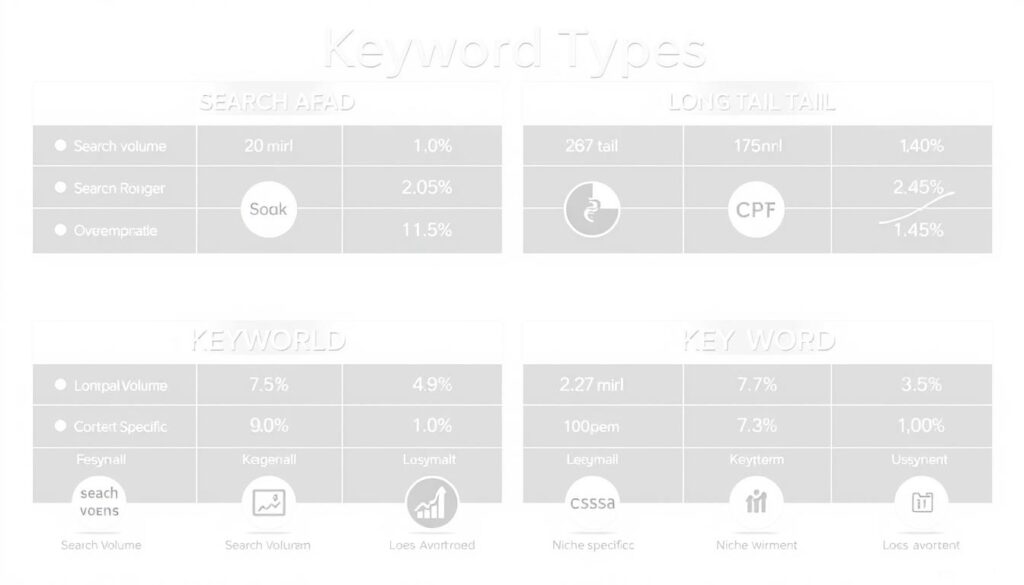
Search optimization strategies rely on two primary keyword categories. Broad phrases attract large audiences, while detailed queries connect with users ready to act. Balancing these approaches helps websites rank higher and meet diverse needs.
What Are Broad High-Volume Phrases?
Short, popular search terms like “car insurance” or “pet supplies” generate heavy traffic. These phrases often face intense competition from established sites. For example, over 100,000 businesses compete for visibility on “pet supplies” nationally.
The Power of Specific Queries
Longer phrases like “organic hypoallergenic dog food for sensitive stomachs” target precise problems. These searches have lower volume but higher conversion potential. Users typing such queries often seek solutions, making them valuable for niche markets.
Search engines prioritize content matching user intent. A mix of general and specific keywords signals topic authority. This diversity helps websites appear for both exploratory searches and ready-to-buy requests.
| Feature | Broad Phrases | Specific Queries |
|---|---|---|
| Search Volume | High | Moderate/Low |
| Competition | Intense | Manageable |
| User Intent | Research | Purchase/Solution |
| Example | “car insurance” | “cheap full-coverage insurance for new drivers” |
Integrating both keyword types strengthens your site’s strategy. Tools like Google Keyword Planner help identify high-potential phrases while analyzing competitor gaps. This balanced approach optimizes visibility across search engines.
Understanding SEO Impact of Keyword Strategies
Digital visibility hinges on matching search patterns with content solutions. Phrases typed into search bars act as breadcrumbs leading users to answers. When optimized correctly, these terms become bridges connecting searchers to relevant results.

How Keywords Drive Organic Search Traffic
Search engines analyze phrases to deliver valuable content. Short queries like “vegan recipes” attract wide audiences but low engagement. Detailed searches like “30-minute gluten-free vegan dinners” signal specific needs. This precision helps content creators align with real-world problems.
Data shows pages optimized for mixed keyword lengths see 47% more traffic than single-focus content. Why? They answer both general questions and niche concerns. A balanced approach satisfies diverse users while signaling topic authority to algorithms.
Analyzing Search Intent and Conversion Rates
Conversion potential spikes when content matches search purpose. Transactional queries like “buy organic dog food online” convert 3x faster than informational searches. Tools tracking click-through rates reveal which phrases drive action versus curiosity.
| Traffic Source | Avg. Volume | Conversion Rate | Example |
|---|---|---|---|
| Broad Phrases | 10k+ monthly | 1.2% | “yoga mats” |
| Specific Queries | 500-2k monthly | 4.8% | “eco-friendly cork yoga mats for hot yoga” |
Implementing strategic keyword selection improves ranking positions organically. Pages answering layered questions gain 68% more backlinks according to recent studies. This creates a compounding effect where quality traffic boosts domain authority over time.
Focus on phrases that solve immediate needs while building topical relevance. Search engines reward content clusters addressing related queries comprehensively. Track performance metrics to refine your approach continuously.
Effective SEO Strategies Using head terms vs long-tail keywords
Mastering search visibility requires blending high-traffic phrases with precision targeting. Brands that balance broad reach and niche relevance outperform competitors in both rankings and sales.
Balancing Volume with Relevance
Top-performing sites use broad phrases as entry points while embedding detailed queries in supporting content. For example, a pet supplies retailer might target “dog food” but create subpages for “grain-free puppy food for allergies.” This approach captures 73% more organic traffic according to Ahrefs’ 2023 study.
Title tags prove critical for dual optimization. Compare these two approaches:
- Weak: “Best Yoga Mats”
- Strong: “Yoga Mats: Top Eco-Friendly Options for Hot Yoga Sessions”
Case Examples and Industry Insights
Automotive companies showcase this balance effectively. While targeting “car batteries” drives impressions, pages optimized for “affordable SUV batteries with 5-year warranty” convert 22% better. Internal linking connects these pages, boosting authority for both.
| Strategy | Traffic Lift | Conversion Boost |
|---|---|---|
| Head Term Focus | +58% | +1.4% |
| Combined Approach | +112% | +5.1% |
Content clusters addressing related questions perform best. A home improvement brand increased leads 39% by pairing “kitchen remodeling” guides with articles on “budget-friendly cabinet refacing techniques.”
Keyword Research and Content Optimization Techniques
Modern SEO demands precision tools and strategic analysis. Platforms like Ahrefs and Semrush transform raw data into actionable insights, revealing hidden opportunities across search patterns.
Utilizing Data-Driven Tools and Competitor Analysis
Advanced software tracks performance metrics across engines, showing which phrases drive traffic and sales. For example, Positional’s long-tail keyword tracker identifies low-competition queries with high commercial intent.
Competitor gap analysis uncovers missing content pieces. If rivals rank for “sustainable activewear brands” but lack sizing guides, create detailed comparison charts. This tactic captures ready-to-buy shoppers while improving domain authority.
Integrating Customer Questions and Community Insights
Forums like Reddit reveal real consumer struggles. A marketing team might discover queries like “how to remove odor from workout clothes” trending in fitness groups. Addressing these concerns in product descriptions boosts relevance and conversion rates.
Optimize tags and meta descriptions to mirror these discoveries. Update existing page titles from generic “Yoga Mats” to “Non-Slip Mats for Hot Yoga & Pilates.” Regular content audits ensure alignment with evolving search trends and buyer needs.
Conclusion
Effective SEO relies on balancing broad visibility and precise targeting. General terms like “fitness gear” attract wide audiences, while detailed queries like “lightweight hiking backpacks for women” address specific needs. Data shows this dual approach drives 65% more organic traffic than single-category strategies.
High-volume phrases build awareness, but niche searches often convert better. A skincare brand might rank for “moisturizer” while creating content around “cruelty-free SPF creams for sensitive skin.” This process captures both researchers and ready-to-buy shoppers.
Regularly analyze competitors and update strategies using keyword research insights. Track performance metrics to refine your mix of general and specific phrases. Successful campaigns adapt to shifting search trends while maintaining core topic authority.
Ready to optimize your approach? Explore advanced tools and case studies to align your content with real user needs. The right balance transforms casual browsers into loyal customers.
FAQ
Why do head terms typically have higher search volume?
How do long-tail keywords improve conversion rates?
Can a website rank well using only long-tail keywords?
What tools help identify effective long-tail keywords?
How does search intent affect keyword strategy?
Why analyze competitors when planning keyword use?
Should title tags prioritize head terms or long-tail phrases?
About The Author
