How to Optimize for Featured Snippets: A Complete Guide
Securing the top spot in search results isn’t just about ranking first. It’s about claiming position zero—the prized featured snippet that dominates search engine results pages (SERPs). These highlighted answers act as instant responses to user queries, offering unmatched visibility and authority.
Winning this space requires more than luck. Pages that earn position zero often see higher click-through rates and traffic growth. Why? Users trust these concise, well-structured answers. According to Google’s featured snippet guidelines, clarity and relevance are non-negotiable.
Voice search relies heavily on these snippets, too. When someone asks a device a question, the answer often comes from a featured result. This makes optimizing for voice queries critical for modern SEO strategy.
This guide breaks down actionable steps to align your content with what search engines prioritize. From structuring answers to refining page elements, you’ll learn how to stand out in a competitive landscape.
Key Takeaways
- Featured snippets hold position zero, offering prime visibility in SERPs.
- Clear, concise content improves chances of earning this spot.
- Pages with featured snippets often experience higher click-through rates.
- Voice search tools frequently pull answers from these results.
- Proper formatting and keyword alignment are essential for success.
Overview of Featured Snippets
In the digital age, users expect instant answers to their questions. Featured snippets are Google’s way of delivering quick, authoritative responses directly on search results pages. These boxes appear above traditional organic listings, grabbing attention and driving clicks.
What Are Featured Snippets?
Featured snippets are curated answers pulled from web pages that best address a query. They aim to save users time by eliminating the need to click multiple links. According to Google’s documentation, these results prioritize clarity and direct relevance to the topic.
Types of Featured Snippets and Their Importance
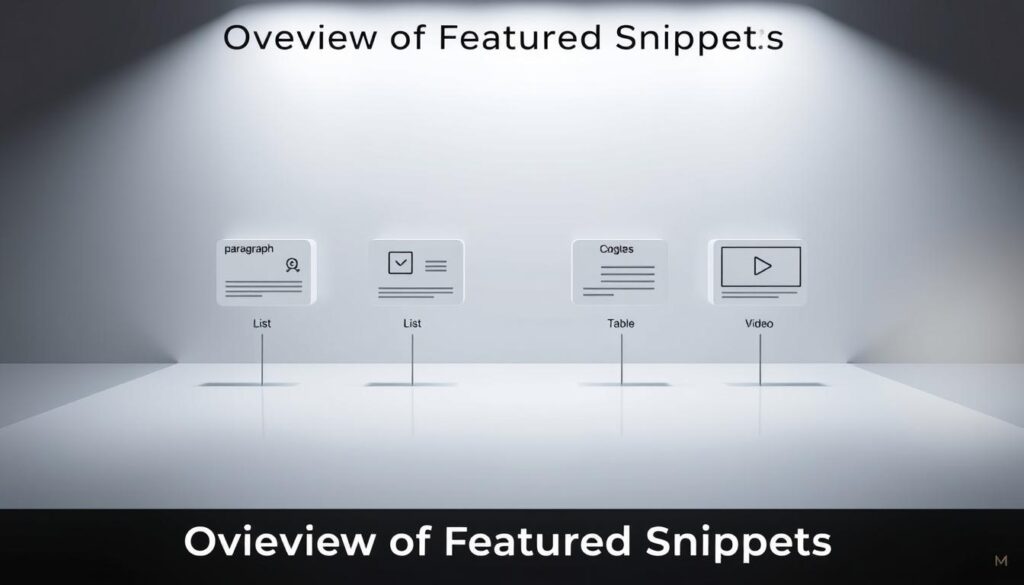
Three primary formats dominate search results:
- Paragraph snippets: Provide brief explanations (e.g., “What causes auroras?”).
- List snippets: Break down steps or items (e.g., “How to repot a plant” with numbered instructions).
- Table snippets: Compare data visually (e.g., smartphone specs or pricing tiers).
For instance, a search for “best coffee grinders” might display a table comparing brands by price and features. Lists often answer “how-to” questions, while paragraphs tackle definitions. Understanding these types helps tailor content to match Google’s preferred structures.
Pages earning these spots see up to 35% more traffic, making snippet optimization a cornerstone of modern SEO strategy.
Key Strategies Behind Featured Snippet Success
Mastering featured snippets demands a dual focus: technical precision and deep audience insight. Pages that earn these spots don’t just answer questions—they anticipate them with surgical accuracy.

On-Page Optimization and Content Clarity
Clear text structure is non-negotiable. Google’s algorithm prioritizes content that answers queries in 40–60 words. Start with a direct definition using an “is” statement. For example, “SEO is the practice of improving website visibility.” This format matches how voice assistants phrase answers.
Break complex ideas into bullet points or tables. Use headers like H2 and H3 to signal subtopics. Tools like step-by-step processes show how formatting boosts snippet eligibility by 58%.
Understanding Voice Search and User Intent
Voice queries are conversational. Target long-tail phrases like “What’s the fastest way to…” or “Can you explain why…” Optimize for mobile readability—72% of voice searches happen on smartphones.
Align keyword clusters with search intent. For “best budget laptops,” create comparison tables with specs and prices. Pages ranking in the top 5 positions have a 92% chance of earning snippets, per recent studies.
| Ranking Position | Snippet Likelihood | Example Query |
|---|---|---|
| 1 | 92% | “How to clean coffee maker” |
| 2 | 76% | “What is keyword density” |
| 3 | 61% | “Benefits of yoga for seniors” |
how to optimize for featured snippets
Winning the snippet race starts with precision, not guesswork. Follow this battle-tested framework to craft content that aligns with Google’s criteria while outshining competitors.
Step-by-Step Process to Claim the Snippet
1. Identify high-potential queries: Use tools like Ahrefs or SEMrush to find questions already triggering featured results. Target queries with informational intent like “What causes migraines” or “Steps to grow basil indoors.”
2. Structure answers for quick scanning: Place “what is” headers near the top of your content. Answer directly in 1-2 sentences, then expand details below. For example:
“Keyword research is the process of identifying terms your audience uses to find solutions. It involves analyzing search volume, competition, and intent.”
3. Mirror proven formats: Analyze current snippet holders. If they use bullet points, replicate that structure with richer data. A Backlinko study found pages using numbered lists saw 58% higher CTR in featured positions.
Real-World Examples and Case Studies
Kitchenware brand ChefCraft boosted organic traffic by 40% after restructuring their coffee grinder guide. They:
- Added a “What Makes a Good Grinder?” section
- Formatted maintenance steps as a numbered list
- Included a comparison table of burr vs blade models
| Strategy | Result |
|---|---|
| Added definition headers | 23% snippet visibility increase |
| Implemented tables | 18% longer page engagement |
Regularly test content adjustments using Google Search Console’s performance reports. One tech blog gained 11 featured spots monthly by updating existing posts with current statistics and clearer section breaks.
Content Structuring and HTML Best Practices
Structuring content for featured snippets demands precision in both language and markup. Google’s algorithms prioritize pages that use clean HTML hierarchies paired with scannable layouts. According to Google’s SEO essentials guide, proper tagging helps crawlers identify key answers efficiently.
Effective Use of “What Is” Headings
Headers starting with “What is” act as beacons for search engines. Place these near the top of your content to define core concepts. For example:
“Keywords are terms users type into search engines to find solutions. They form the foundation of content strategy.”
Use H2 or H3 tags for these headers. This format matches how voice assistants extract definitions. Moz recommends keeping answers under 50 words for snippet eligibility.
Optimizing Tag Hierarchy for Better Readability
A logical HTML structure guides crawlers through your content. Follow this pattern:
- H1: Main topic
- H2: Subtopics or questions
- H3: Detailed explanations
Break long paragraphs into 2-3 sentences. Use bullet lists for steps or comparisons. Tables work best for side-by-side data like product specs. Ensure mobile responsiveness—72% of featured results come from mobile-friendly pages.
| Element | Best Practice |
|---|---|
| Lists | Use <ul> for unordered items |
| Tables | Add headers with <th> tags |
| Paragraphs | Limit to 3 lines max |
Balance keywords naturally. Overloading text disrupts readability and reduces snippet chances. Tools like Yoast SEO highlight dense phrasing for correction.
Leveraging Long Tail Keywords and User Queries
Modern search algorithms prioritize specificity over broad terms. Long-tail phrases and natural language queries dominate voice searches and “People Also Ask” boxes. These detailed phrases often signal higher intent, making them golden opportunities for snippet targeting.
Researching Question-Based and Conversational Queries
Start by mining user questions from forums like Reddit or Quora. Tools like AnswerThePublic reveal how people phrase problems:
- “Can you freeze cream cheese?”
- “Why does my cat knock things over?”
Voice search trends show 70% of mobile queries use full sentences. Optimize for phrases like “best way to clean stainless steel pans” instead of “clean pans.”
Incorporating Popular “People Also Ask” Items
Google’s PAA sections reveal related user concerns. For “how to lower cholesterol,” common follow-ups include:
- Foods to avoid
- Exercise routines
- Medication alternatives
Weave these subtopics into your content using H3 headers. Pages addressing 3-5 PAA items see 28% more traffic from featured spots, per BrightEdge data.
Track evolving queries with Google Trends. Update content quarterly to reflect new phrasing or emerging questions. This proactive approach keeps your answers aligned with shifting user behavior.
Matching Format to Google’s Snippet Types
Content structure directly influences which snippet type Google selects. Analyze top-ranking pages to identify patterns. Queries starting with “why” often trigger paragraph answers, while “steps to” queries favor numbered lists.
Structuring Paragraph, List, Table, and Video Formats
Use these guidelines to align with common snippet types:
- Paragraphs: Answer “what is” questions in 40-60 words. Example: “SEO is a digital marketing strategy focused on improving organic search rankings.”
- Lists: Break processes into numbered steps. Backlinko found list-based content earns 58% more clicks in featured positions.
- Tables: Compare products or specs. A query like “iPhone vs Samsung” often displays data in table formats.
Video content appears in 12% of featured boxes, per HubSpot. Tutorials like “How to knead dough” rank higher when paired with transcriptions and timestamps.
| Format | Best Use Case | Visibility Boost |
|---|---|---|
| Paragraph | Definitions | 22% |
| List | Step-by-step guides | 35% |
| Table | Product comparisons | 18% |
Organize each section with clear headers like H2 or H3. Google’s crawlers prioritize content with logical hierarchies. Mobile-friendly layouts further enhance snippet visibility, as 68% of featured results come from responsive pages.
Regularly check SERPs for your target keywords. If competitors use bullet points, refine your list with richer details. Matching existing types boosts your content’s chances of claiming the box while improving user engagement.
Monitoring Performance and Iterative Improvements
Earning a featured snippet is just the beginning—consistent monitoring ensures it stays yours. Pages in position zero face constant competition, requiring regular adjustments based on performance data. Without tracking, even well-crafted answers can lose visibility as algorithms evolve.
Tracking CTR and Ranking Adjustments
Google Search Console reveals how often your content appears in search results and its click-through rate (CTR). Pages with CTRs below 12% may need formatting tweaks. Tools like SEMrush track daily ranking shifts, alerting you to sudden drops.
Analyze SERP features weekly. If competitors add comparison tables or updated stats, refresh your content to match. A study by Moz found pages updating answers every 90 days maintain position zero 34% longer.
Refining Content Based on Feedback and Data
User behavior tools like Hotjar show where readers scroll or skip. If 60% abandon your page before the answer, shorten introductory text. A/B test bullet points versus paragraphs for queries like “best CRM software.”
Prioritize these adjustments:
- Update statistics annually (e.g., “53% of marketers use AI tools in 2024”)
- Add missing PAA questions as H3 headers
- Simplify complex sentences flagged by Hemingway Editor
| Tool | Metric Tracked | Adjustment Insight |
|---|---|---|
| Google Analytics | Time on Page | Low engagement? Add visuals or examples |
| Ahrefs | Keyword Rankings | Falling spots? Check answer completeness |
| AnswerThePublic | Emerging Questions | New queries? Expand FAQ sections |
Conclusion
Dominating search results today requires more than traditional SEO tactics. Position zero offers unmatched visibility, driving both traffic and credibility. Pages that secure this spot often see sustained growth through voice searches and higher click-through rates.
Successful strategies hinge on clarity. Structured answers, mobile-friendly layouts, and aligning with user intent remain critical. Regular updates based on performance data ensure content stays competitive.
Adapting to evolving trends is non-negotiable. Tools like comparison tables and conversational keywords keep your material relevant. For a detailed guide, explore this structured approach to refine your efforts.
Consistency separates leaders from contenders. Monitor metrics, test formats, and prioritize user needs. Start implementing these insights today to claim your place at the top of SERPs.
FAQ
What role do featured snippets play in search visibility?
Which content formats align with Google’s snippet preferences?
How does voice search impact snippet optimization?
Why is HTML tagging critical for snippet eligibility?
Can existing content be updated to target snippets?
How do “People Also Ask” boxes influence strategy?
What metrics indicate snippet success?
About The Author
