On-Page SEO vs Off-Page SEO: What’s the Difference?
When building a strong online presence, website owners focus on two core strategies: optimizing their own pages and building authority through external channels. The first involves tweaking elements directly under your control, like improving content quality or adjusting technical details. The second relies on earning trust from other websites and audiences across the web.
Direct optimizations include refining headlines, structuring internal links, and ensuring pages load quickly. These changes make content more appealing to visitors while helping platforms like Google understand your site’s purpose. For example, updating meta tags or adding relevant keywords naturally into text can boost visibility.
External efforts, however, focus on reputation-building beyond your domain. Activities like earning backlinks from reputable sites or engaging audiences on social media signal credibility to algorithms. A glowing review from a trusted blog or a viral infographic shared across forums both fall into this category.
Balancing these approaches is critical. Overemphasizing one can leave gaps in your strategy. This article breaks down how each method works, when to prioritize them, and practical steps to implement both effectively.
Key Takeaways
- Direct page improvements enhance user experience and technical performance.
- External reputation-building relies on third-party endorsements and audience engagement.
- Meta tags and content structure are key elements of on-site optimization.
- High-quality backlinks and social shares drive off-site authority.
- Combining both strategies delivers sustainable ranking results.
Understanding SEO: The Foundation of Digital Success
In the digital age, visibility determines whether businesses thrive or fade. Search engine optimization (SEO) acts as the backbone of this visibility, shaping how platforms like Google rank your website in organic results. At its core, SEO ensures your content aligns with what users seek while making it easy for search algorithms to understand your pages.
What Is SEO and Why It Matters
SEO involves refining your website to meet technical standards and user expectations. For example, 53% of all web traffic comes from organic searches, according to BrightEdge. This means optimizing page titles, headers, and meta descriptions directly impacts whether your content gets noticed. Tools like SEMrush highlight that pages ranking in the top three positions receive 54% more clicks than those lower on the results page.
The Role of SEO in Driving Organic Traffic
Quality content solves problems, answers questions, and keeps visitors engaged. But even the best articles need structure. Internal links guide users to related topics, while earning backlinks from trusted sites signals authority to search engines. Together, these strategies create a feedback loop: better rankings lead to more traffic, which fuels brand growth.
Think of SEO as a bridge between your goals and your audience’s needs. When your website delivers value quickly and clearly, search engines reward you with visibility—and customers reward you with trust.
on-page seo vs off-page seo: A Comprehensive Comparison
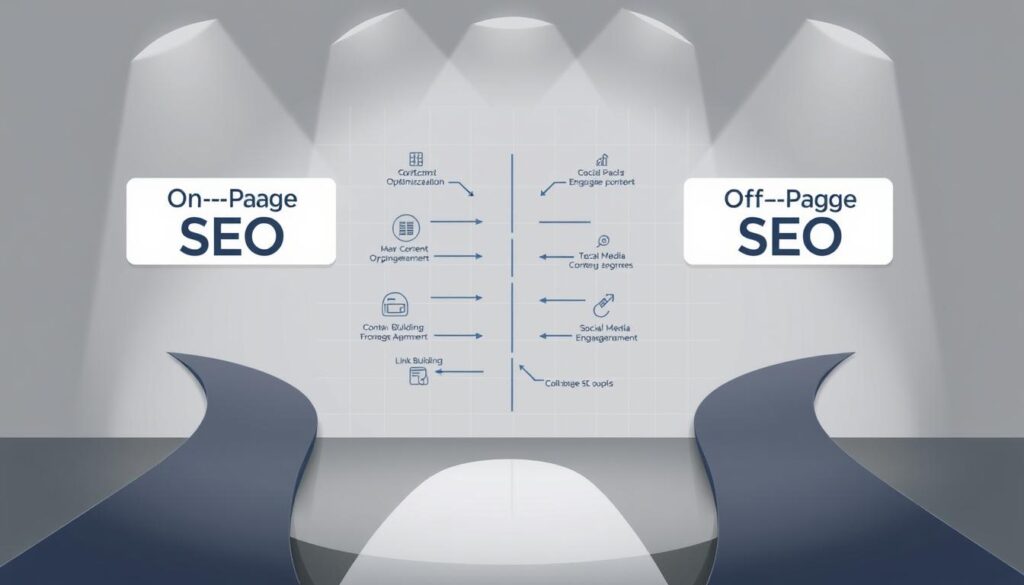
Businesses aiming for top search rankings must master two distinct approaches: refining their own digital assets and cultivating external endorsements. While both methods boost visibility, they operate through different mechanisms.
Defining On-Page SEO
This strategy focuses on elements directly controlled within your site. Key components include:
- Header tags that organize content hierarchy
- Keyword-optimized text matching user intent
- Internal links connecting related pages
For example, restructuring product descriptions with clear H2 headings and descriptive URLs can help engines interpret content faster. As marketing expert Jane Doe notes:
“A well-optimized page acts like a roadmap—for both visitors and crawlers.”
Defining Off-Page SEO
External credibility signals dominate here. Critical factors involve:
- Backlinks from industry-leading sites
- Social media shares amplifying content reach
- Online reviews mentioning your brand
An outdoor gear retailer earning links from hiking blogs typically sees faster ranking improvements than competitors relying solely on technical tweaks.
| Factor | On-Page SEO | Off-Page SEO |
|---|---|---|
| Core Focus | Site structure & content | External authority signals |
| Influence Speed | Immediate impact | Gradual effect |
| Best For | New pages | Competitive keywords |
Prioritize internal optimizations when launching fresh content. Shift to external strategies once your pages meet technical standards. Brands often see better results when combining both approaches—like using data-driven content to attract natural backlinks.
Essential On-Page SEO Factors
Effective website optimization hinges on refining specific components that both visitors and algorithms prioritize. These elements work together to clarify your content’s purpose while improving navigation and engagement.
Optimizing Title Tags and Meta Descriptions
Title tags act as your page’s headline in search results. Keep them under 60 characters to avoid truncation. Include primary keywords naturally, like “Best Running Shoes for Trail Hiking” instead of generic phrases.
Meta descriptions summarize content for users. While not a direct ranking factor, compelling summaries boost click-through rates. Tools like Moz recommend aligning them with search intent—answer questions quickly and clearly.
Enhancing Content Quality and Internal Linking
High-quality content addresses user needs without fluff. Use bullet points for scannability and link related articles to keep visitors exploring. For example, a baking blog might connect a cookie recipe to a post about kitchen tools.
Internal links distribute authority across your site. A study by Ahrefs shows pages with 10-15 internal links often rank higher than those with fewer connections.
Image Alt Text, URL Slugs, and Header Tags
Alt text describes images for screen readers and engines. Use keywords sparingly: “chocolate-layer-cake-closeup” beats “dessert-photo-123.”
URL slugs should be concise and descriptive. Headers (H1-H6) organize content logically. Avoid skipping levels—H2s should follow H1s, not jump to H4s.
| Element | Purpose | Best Practice |
|---|---|---|
| Title Tag | Signals page topic | Include primary keyword first |
| Header Tags | Structures content | Use H1 once per page |
| Alt Text | Describes images | Avoid keyword stuffing |
Regular audits using tools like Screaming Frog help identify broken links or missing tags. Adjustments based on data ensure your site meets evolving engine standards while delighting users.
Powerful Off-Page SEO Strategies
Establishing credibility beyond your website requires deliberate efforts to earn trust across the web. Off-page tactics focus on how others perceive and interact with your brand, directly influencing search rankings through third-party validation.
Building High-Quality Backlinks
Backlinks from authoritative sites act like digital votes of confidence. For example, a tech startup earning a link from a respected industry blog gains instant credibility. Prioritize relevance over quantity—10 links from niche-specific platforms often outperform 100 generic ones.
Effective methods include:
- Guest blogging with original research or expert insights
- Creating shareable tools like calculators or templates
- Partnering with influencers for co-branded content
Leveraging Social Media and Brand Mentions
Platforms like LinkedIn and Twitter amplify content reach while fostering community engagement. A viral infographic about sustainable packaging, shared across eco-conscious forums, can drive referral traffic and indirect quality signals.
Monitor brand mentions using tools like Mention or Google Alerts. Responding to reviews and curating user-generated content builds a positive experience that search algorithms recognize.
| Tool | Purpose | Best For |
|---|---|---|
| Ahrefs | Backlink Analysis | Identifying link opportunities |
| BuzzSumo | Social Monitoring | Tracking content performance |
| SEMrush | Brand Tracking | Measuring authority growth |
Integrate these strategies with on-page optimizations for a cohesive approach. Regular audits ensure external efforts align with your core messaging and target keywords, creating a unified path to higher rankings.
The Role of Technical SEO in Enhancing Page Experience
A fast, secure website acts like a well-oiled machine—it keeps visitors engaged and search engines happy. Technical optimizations bridge the gap between content quality and real-world performance, directly impacting how platforms rank your pages.
Improving Site Speed and Mobile Friendliness
Pages loading in under 2 seconds retain 35% more visitors than slower competitors. Tools like Google PageSpeed Insights identify bottlenecks—large images or unoptimized code—that delay load time. For example, an e-commerce site reduced bounce rates by 22% after compressing product photos.
Mobile responsiveness matters equally. Over 60% of global web traffic comes from smartphones. Test your design across devices using BrowserStack. Simple fixes like responsive menus or larger buttons create seamless experiences.
Ensuring Crawlability and Secure Connections
Search engines need clear pathways to index content. A broken robots.txt file or missing sitemap can hide vital information. Regular audits with Screaming Frog ensure crawlers access key pages efficiently.
HTTPS encryption builds trust while boosting rankings. Sites without SSL certificates lose 85% of potential customers due to security warnings. Services like Let’s Encrypt offer free solutions—no technical expertise required.
“Technical SEO isn’t optional. It’s the foundation every digital strategy needs to stand on.”
Combine these efforts with content and link-building tactics for maximum impact. When technical health meets user-centric design, rankings—and traffic—follow naturally.
Integrating On-Page and Off-Page SEO for Lasting Impact
Digital success thrives when internal optimizations and external credibility work in tandem. Websites ranking consistently combine polished content with signals that prove their value to both users and algorithms.
Creating Synergy Between Tactics
High-quality articles with clear headers attract visitors, while backlinks from industry leaders validate your authority. For example, a cooking blog improved its search engine rankings by 40% after pairing recipe updates with guest posts on nutrition sites.
Balance these efforts through:
- Monthly audits of meta descriptions and external links
- Aligning content upgrades with social media campaigns
- Using internal links to guide users toward link-worthy pages
| Internal Focus | External Focus | Combined Benefit |
|---|---|---|
| Keyword-rich headers | Guest blogging | Enhanced topic authority |
| Mobile optimization | Forum engagement | Higher click-through rates |
| Image alt text | Influencer partnerships | Broader audience reach |
A tech startup doubled organic traffic by fixing site speed issues while launching a LinkedIn thought leadership series. Their technical improvements kept visitors engaged, while social media activity drove referral links.
Prioritize quarterly reviews to assess what’s working. Adjust content based on search results data, then amplify top performers through outreach. This cycle builds momentum—each improvement reinforces the next.
“Integration isn’t optional. It’s how you turn temporary gains into permanent growth.”
Advanced Techniques and Tools for SEO Optimization
Mastering modern search visibility requires blending cutting-edge tools with adaptive strategies. Data-driven approaches help identify growth opportunities while maintaining alignment with evolving algorithms. Over 78% of marketers using analytics tools report faster improvements in engine rankings, according to recent industry surveys.
Utilizing Analytics and SEO Auditing Tools
Platforms like Google Analytics and SEMrush transform raw data into actionable insights. Track keyword performance, monitor internal links, and identify underperforming meta descriptions through automated reports. For example, one SaaS company boosted organic traffic by 45% after fixing broken links discovered during a Screaming Frog audit.
Key metrics to prioritize:
- Click-through rates for specific meta descriptions
- Authority scores of referring domains
- Mobile load speeds across pages
| Tool | Primary Use | Impact Area |
|---|---|---|
| Ahrefs | Backlink Analysis | Off-page authority |
| Moz Pro | Keyword Tracking | On-page relevance |
| Hotjar | User Behavior | Content engagement |
Staying Ahead with SEO Trends and Innovations
Algorithm updates now occur 500-600 times yearly, making adaptability crucial. Voice search optimization and AI-generated content analysis are reshaping traditional practices. A fashion retailer improved engine rankings by 30% after implementing schema markup for product FAQs—a trend identified through SEMrush’s trend detection features.
Proactive teams:
- Attend webinars on emerging technologies like NLP
- Test new structured data formats quarterly
- Compare performance against competitors monthly
“The best optimization strategy evolves daily. What worked yesterday might hinder you tomorrow.”
Conclusion
Building lasting visibility online demands a blend of precision and partnership. On-page efforts like content quality and technical tweaks form your foundation, while off-page strategies—such as earning brand mentions or anchor text backlinks—validate your authority beyond your domain.
Local businesses thrive by combining these tactics with Google Business optimization. For example, a café improving menu descriptions (on-page) while encouraging reviews on travel forums (off-page) sees better engine results.
Technical health remains critical. Fast load times and mobile-friendly designs keep visitors engaged. Pair this with local SEO elements like location-based keywords to attract nearby customers.
Success lies in balance. Regularly audit your outside website presence through social listening tools. Update SEO factors like meta tags while nurturing relationships with industry influencers. For a deeper dive into optimizing both approaches, explore this comprehensive comparison.
Start small: refine one page’s headers, then reach out to a relevant blog for collaboration. Consistent adjustments, guided by data, create momentum. When every piece works together—content, connections, and technical care—your digital presence becomes unstoppable.
FAQ
How do on-page and off-page strategies differ in improving search rankings?
What are the most critical factors for optimizing a webpage’s visibility?
Why are backlinks important for a website’s authority?
How does technical SEO impact user experience?
Can social media activity influence search engine results?
What tools help track the success of SEO campaigns?
How can local businesses benefit from SEO strategies?
About The Author
