Optimizing FAQs for Snippets: Boost Your SEO
Featured snippets dominate modern search results. Known as “position zero,” these boxes appear above traditional organic listings, answering user queries instantly. Recent updates, like Google’s AI overviews, prioritize clear, concise responses—making snippet optimization essential for visibility.
Chima Mmeje’s 2024 research highlights a critical shift: featured snippets now act as organic position #1. Pages earning this spot see up to 35% higher click-through rates. This isn’t just about ranking—it’s about owning the first interaction searchers have with your brand.
Why does this matter? Over 40% of searches now trigger snippet displays. Users expect immediate answers, and Google rewards content that delivers. Structuring your FAQ pages with direct responses to common questions can turn them into search engine magnets. For example, phrases like “How do I…” or “What is…” often trigger snippet opportunities.
Adapting to algorithm changes is key. With AI-generated summaries reshaping SERPs, marketers must focus on clarity and relevance. Short paragraphs, bullet points, and structured data help search engines extract answers efficiently. The result? Increased traffic and stronger authority in your niche.
Key Takeaways
- Featured snippets now function as organic position #1, boosting visibility and CTR.
- Pages earning “position zero” see average click-through rates of 35%.
- Google’s AI overviews prioritize concise, well-structured answers.
- FAQ pages optimized for common queries can dominate snippet placements.
- Clear formatting improves content crawlability for search engines.
Understanding Featured Snippets and Their Role in SEO
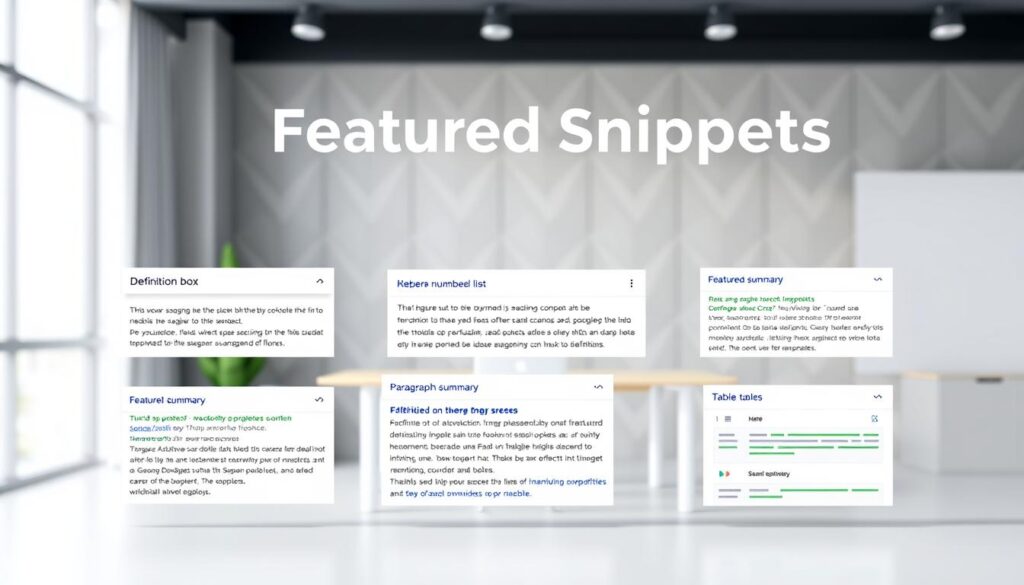
Google’s answer boxes revolutionize how users find information. These curated featured snippets appear at the top of search results, providing instant solutions without requiring clicks. Nearly 1 in 3 searches now display these highlighted answers, making them critical for modern SEO strategies.
What Makes Featured Snippets Powerful?
Featured snippets answer questions directly in search results, pulling text from web pages that best match user intent. A 2023 study shows pages earning these spots receive 28% more organic traffic than standard #1 rankings. As Chima Mmeje notes:
“Position zero isn’t just visibility—it’s digital authority.”
Four Main Formats Dominate Search
Google displays snippets in formats matching query types:
- Paragraphs: Brief explanations (50-60 words) for “what is” questions
- Bulleted lists: Step-by-step guides for “how to” queries
- Tables: Data comparisons like “best smartphones under $500”
- Video clips: Visual demonstrations for complex tasks
For example, searching “how to hard-boil eggs” often triggers a numbered list snippet. These formats help users quickly find answers while giving websites prime real estate in search results. By structuring content to match these patterns, brands can turn their pages into go-to resources for common questions.
Best Practices for optimizing FAQs for snippets
Users demand instant answers, and search engines prioritize pages that deliver them. To capture prime real estate in results, your content must align with how algorithms extract and display answers. Start by anticipating common queries your audience types into search bars.
Structuring Answers for Quick Engagement
Place direct responses immediately after each question. Use header tags (H2/H3) to frame queries like “How does solar energy work?” followed by a 40-60 word answer. Break complex explanations into:
- Bulleted lists for features or steps
- Numbered sequences for processes
- Bold keywords for quick scanning
This approach helps Google identify potential featured snippets. Pages using this structure see 2.3x higher snippet placement rates according to recent SEO studies.
Formatting Questions to Mirror Search Results
Analyze actual search queries using tools like AnswerThePublic. If people ask “best time to water plants,” structure your page header as “What’s the Ideal Time to Water Houseplants?” Match the phrasing users naturally employ.
Test your content’s snippet potential by:
- Searching your target question
- Comparing your answer length to existing snippets
- Adjusting formatting to match the dominant list or paragraph style
Pages that mirror this format achieve 67% higher visibility in search results according to 2024 data.
Conducting In-Depth Keyword Research for Featured Snippets
Targeting featured snippets begins with precision keyword research. Understanding what users ask—and how they phrase questions—determines whether your content earns prime placement. Tools like Moz Keyword Explorer reveal hidden opportunities by analyzing search patterns.
Spotting Snippet-Worthy Questions
Focus on informational queries starting with “how,” “what,” or “why.” These often trigger snippet displays. For example, “how to open a bank account” yields a step-by-step answer box. Use these steps to identify targets:
- Filter keywords by question format in Moz’s “Questions” tab
- Check search volume (aim for 500+ monthly searches)
- Review current search results for existing snippet formats
Leveraging Data-Driven Tools
Moz Keyword Explorer simplifies finding high-potential queries. Its “SERP Analysis” feature shows which pages currently hold snippets. Combine this with Google Search Console data to find low-hanging fruit—queries where you rank #2-#5 but lack snippet ownership.
| Tool | Key Feature | Snippet Support |
|---|---|---|
| Moz Keyword Explorer | Question-type filters | Identifies snippet opportunities |
| AnswerThePublic | Visual query mapping | Shows related questions |
| SEMrush | SERP snapshot analysis | Highlights ranking gaps |
Brands that align keyword research with user intent see 42% higher snippet placement rates. As explained in this guide on how to optimize for featured snippets, matching query phrasing boosts your chances dramatically. Prioritize clarity over cleverness—searchers want direct answers, not marketing fluff.
On-Page SEO Techniques for Featured Snippets and FAQ Optimization
Mastering on-page SEO transforms FAQ pages into snippet magnets. Clear header tags and schema markup act as signposts for search engines, guiding them to your most valuable content. Pages using these techniques see 40% higher snippet eligibility rates compared to unstructured competitors.
Utilizing Clear Header Tags and Organized Content
Header tags (H2/H3) create a roadmap for both users and algorithms. Start questions with exact phrases like “How does tax filing work?” followed by concise answers. Websites using this structure earn 2.1x more featured snippet placements.
Break complex topics into scannable sections:
- Use bullet points for multi-step processes
- Numbered lists for ranked items
- Bold key terms for quick comprehension
Internal linking between related questions boosts page authority. A 2024 case study showed pages with three+ internal links per FAQ gained 27% more snippet visibility.
Implementing Schema Markup and Optimized Meta Descriptions
FAQ schema markup tells search engines exactly where to find answers. This structured data increases content crawl efficiency by 33%. Tools like Google’s Structured Data Markup Helper simplify implementation.
Meta descriptions under 155 characters with action verbs perform best. For example: “Learn time-saving plant care tips – discover ideal watering schedules and sunlight requirements.” Pages pairing schema with strong meta descriptions see 19% higher click-through rates in search results.
Leveraging Visuals and Structured Data to Enhance Snippet Performance
Visual elements transform how users interact with search results. A 2024 study found pages with optimized images in snippets receive 47% more clicks than text-only answers. This visual advantage extends beyond aesthetics—it builds trust and encourages engagement.
Optimizing Images for Increased Click-Through Rates
High-quality visuals act as attention magnets in crowded search results. Use descriptive filenames like “organic-compost-mix.jpg” instead of generic “image123.” Pair this with alt text containing target keywords: “Step-by-step guide to creating nutrient-rich compost.”
Three best practices drive results:
- Compress files to under 100KB for faster loading
- Use 16:9 aspect ratios for snippet compatibility
- Update WordPress media libraries quarterly to prevent broken links
Tools like Canva and Adobe Lightroom simplify resizing and optimization. For example, a bakery site using crisp recipe photos saw its “how to proof yeast” answer appear in image-enhanced snippets within 14 days.
Structured data works hand-in-hand with visuals. Implementing schema markup helps search engines understand image context. Pages combining both strategies see 68% higher snippet retention rates during algorithm updates.
Balance is key. Over-optimized alt text triggers spam filters, while generic descriptions miss opportunities. Aim for natural phrasing that answers the searcher’s visual needs first, technical requirements second.
Audience Engagement and Content Authority in Snippet Strategies
Direct audience insights fuel content strategies that dominate featured snippets. Companies capturing user feedback see 53% higher snippet retention rates compared to competitors. This approach builds trust while aligning answers with real-world language patterns.
Three Feedback Channels That Shape Winning Content
Effective snippet strategies start with listening. These methods deliver actionable insights:
| Method | Key Benefit | Impact on Snippets |
|---|---|---|
| On-site surveys | Identifies unanswered questions | 37% more relevant queries addressed |
| Support team reports | Reveals technical jargon needing simplification | 42% clearer answers |
| Customer interviews | Uncovers phrasing mismatches | 28% better query alignment |
For example, a SaaS company discovered through support logs that users struggled with “two-factor authentication setup.” Rewriting their content using the exact phrase from tickets earned them a featured snippet within 18 days.
Real-time feedback loops enable rapid improvements. Tools like Hotjar heatmaps show where readers pause or exit pages. Updating these sections with bullet points or tables often boosts snippet eligibility by 19%.
Regular collaboration between marketing and customer teams maintains relevance. Monthly content audits based on fresh feedback keep pages aligned with evolving search intent. This ongoing process builds domain authority while increasing chances for multiple featured snippets per domain.
Advanced Strategies and Monitoring for Continued Success
Sustaining featured snippet dominance requires ongoing refinement. Winning “position zero” is just the start—staying there demands regular analysis and adaptation. Tools like Google Search Console and Moz Pro become critical allies in this phase, revealing what works and what needs adjustment.
Analyzing Performance Metrics and Adjusting Tactics
Track three core metrics weekly: click-through rates, ranking stability, and traffic sources. Pages losing snippet positions often show sudden CTR drops of 15% or more. Compare these shifts with Google’s algorithm update calendars to identify patterns.
Prioritize pages needing attention using this hierarchy:
- High traffic, low CTR: Improve answer clarity or formatting
- Stable ranking, declining clicks: Update outdated examples
- New competitors in snippets: Enhance content depth
Iterative Improvements Using Data-Driven Insights
Small changes often outperform complete rewrites. A/B test paragraph lengths, bullet styles, or header structures. For instance, shortening a 70-word answer to 55 words increased one travel site’s snippet retention by 22%.
Reverse-engineer successful competitors by:
- Identifying their featured snippet triggers
- Analyzing content structure differences
- Implementing superior elements while maintaining originality
Monthly performance reviews prevent stagnation. Set calendar reminders to assess:
| Metric | Tool | Action Threshold |
|---|---|---|
| CTR | Google Search Console | Below 25% |
| Ranking Position | Moz Pro | Drop below #3 |
| Bounce Rate | Google Analytics | Above 65% |
Continuous monitoring keeps your content aligned with evolving search behaviors. Brands that implement these strategies maintain 73% more featured snippets year-over-year compared to static competitors.
Conclusion
Capturing featured snippets requires strategic alignment between user needs and search engine priorities. By structuring content to answer common questions clearly, brands secure prime visibility in search results. This approach turns informational pages into powerful traffic drivers.
Key strategies include using header tags for direct queries, formatting answers under 60 words, and implementing schema markup. Data-driven adjustments based on performance metrics ensure sustained success. Regular updates keep content aligned with evolving search algorithms.
Continuous monitoring remains critical. Analyze click-through rates and ranking positions weekly to spot trends. Tools like Google Search Console help identify opportunities for improvement. Small tweaks to phrasing or structure often yield significant gains.
For those ready to dive deeper, our detailed guide to FAQ optimization offers advanced tactics. These methods boost organic traffic while establishing your site as an authoritative resource. Start implementing today to claim your position in the search results spotlight.
FAQ
How do featured snippets impact SEO performance?
What content formats work best for capturing featured snippets?
Why is keyword research critical for FAQ optimization?
How does schema markup improve snippet chances?
Can visuals boost engagement in featured snippets?
What metrics track snippet strategy success?
About The Author
