Backlink Exchange Risks: What You Need to Know
Reciprocal linking strategies have evolved significantly since the early days of SEO. While partnerships between websites once thrived through simple one-to-one agreements, modern search algorithms now scrutinize these tactics more closely. Understanding how to navigate this landscape is critical for maintaining organic visibility.
In the past, mutual linking arrangements were a straightforward way to boost rankings. However, as SEO expert Brian Dean notes, “Google’s algorithm updates increasingly penalize manipulative practices.” This shift has forced marketers to rethink traditional approaches, especially with complex models like ABC linking schemes gaining traction.
Today’s digital environment demands balance. Overusing reciprocal strategies can trigger algorithmic penalties or manual actions from search engines. Aaron Anderson, a technical SEO specialist, emphasizes that “prioritizing relevance and editorial value remains non-negotiable” when collaborating with other sites.
This guide explores both the potential advantages and hidden dangers of modern linking practices. You’ll learn how to identify red flags, align with Google’s Webmaster Guidelines, and integrate these tactics safely into broader SEO efforts. We’ll also provide actionable steps to maintain compliance while improving domain authority.
Key Takeaways
- Modern search algorithms heavily scrutinize reciprocal linking practices
- Complex exchange models carry higher penalty risks than traditional methods
- Google’s 2023 spam updates specifically target artificial link schemes
- Strategic partnerships require careful relevance assessment
- Balancing link acquisition methods helps maintain SEO health
- Regular audits prevent unintended violations of search guidelines
Introduction to Backlink Exchange Risks
Website alliances via mutual referrals now face stricter algorithmic scrutiny. These partnerships, when executed thoughtfully, can enhance organic traffic and domain credibility. However, missteps may trigger search engine penalties or demotions in rankings.

Overview of Link Exchanges and Their Role in SEO
Natural reciprocal links develop when two sites reference each other’s content organically. For example, a local bakery linking to a flour supplier that mentions their products. Artificial schemes involve planned agreements without editorial justification, like ABC exchanges where Site A links to B, B to C, and C back to A.
| Factor | Natural Links | Artificial Schemes |
|---|---|---|
| Formation Process | Editorial choice by content creators | Prearranged agreements |
| Search Engine View | Credible endorsement | Manipulative tactic |
| Long-Term Impact | Sustained traffic growth | Potential penalties |
Why Understanding Risks Is Crucial Today
Google’s 2023 updates explicitly target artificial networks. Sites using excessive link swaps often see sudden traffic drops—sometimes by 40% or more. Even ethical linking practices require regular audits to maintain compliance with evolving guidelines.
Prioritizing relevant links from authoritative domains proves safer than chasing quantity. As one marketing director noted, “One quality connection outperforms ten forced partnerships.” Later sections will explore balanced strategies for sustainable growth.
Understanding Link Exchanges and Their Evolution
The landscape of collaborative linking has shifted from simplicity to complexity. Early webmasters often used basic agreements between two domains, but modern strategies involve layered networks that challenge detection algorithms.
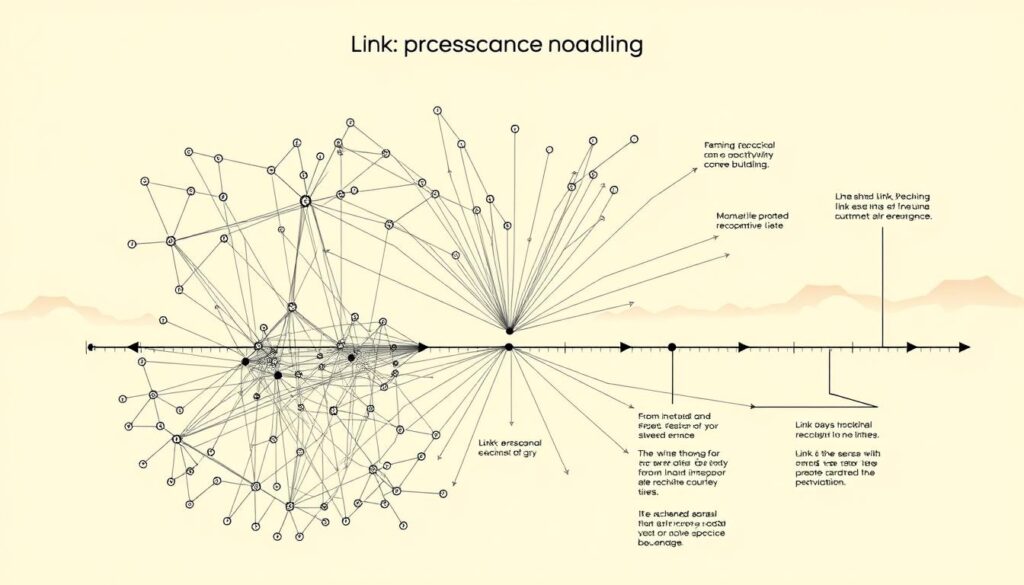
From One-to-One to ABC Link Exchanges
Traditional partnerships involved direct swaps between websites. A local coffee shop might connect with a nearby bakery through mutual recommendations. These arrangements worked until search engines identified patterns indicating manipulation.
Modern ABC models create circular connections across three or more domains. Site A references Site B, which links to Site C, completing the loop back to the original source. This approach attempts to mimic organic relationships but requires careful coordination.
| Factor | One-to-One | ABC Model |
|---|---|---|
| Formation | Direct agreement | Multi-step coordination |
| Participants | 2 websites | 3+ websites |
| Detection Risk | High | Moderate |
| SEO Impact | Short-term gains | Sustained visibility |
Private communities on platforms like Slack now facilitate these complex arrangements. Groups share content opportunities and coordinate placements across multiple domains. While efficient, these systems make quality control challenging.
SEO strategist Lisa Marino warns: “Automated tracking tools struggle with multi-layered partnerships. Manual reviews remain essential for maintaining standards.” This reality underscores why many professionals prefer ethical link-building practices over convoluted schemes.
Advanced tactics can temporarily boost rankings but demand constant monitoring. Balancing creative collaboration with search guidelines proves crucial for lasting success in today’s competitive digital environment.
Benefits and Drawbacks of Exchanging Backlinks
Balancing link partnerships is key to leveraging their benefits while avoiding pitfalls. Strategic collaborations with trusted domains can accelerate organic growth and improve search visibility. For instance, a tech blog partnering with a software developer saw a 28% traffic increase within three months through editorially relevant connections.
High-quality connections from authoritative sources boost domain authority. They help search engines recognize your site as a credible resource. Properly structured partnerships also speed up content indexing, especially for new pages needing initial traction.
| Advantages | Challenges |
|---|---|
| Improved domain authority | Algorithmic penalties for overuse |
| Faster page discovery | Reputation damage from spammy links |
| Targeted referral traffic | Time-intensive partner vetting |
However, partnerships with low-quality domains create long-term problems. A nutrition website once lost 35% of its rankings after linking to a supplement retailer with thin content. Google’s systems increasingly detect artificial patterns, as noted in their 2023 spam update documentation.
Successful strategies focus on natural relationship-building rather than transactional swaps. While collaborative linking offers measurable SEO benefits, maintaining strict quality standards remains essential for sustainable results.
Backlink Exchange Risks: Identifying Critical Pitfalls
Digital partnerships require careful navigation to avoid hidden traps. Recognizing problematic patterns early helps maintain website credibility and search visibility. Let’s explore critical red flags and practical solutions.
Common Warning Signs in Reciprocal Linking
Sudden spikes in outbound links often indicate forced partnerships. For example, a travel blog adding 15 new links to unrelated finance websites within a week raises algorithmic eyebrows. Other red flags include:
- Repeated links to domains with low organic traffic
- Identical anchor text across multiple websites
- Partners operating in unrelated industries
Marie Dubois, SEO director at Moz, warns: “Automated tools now track link velocity. Rapid changes trigger manual reviews faster than ever.” A fitness site recently lost 42% of its traffic after linking to a gambling platform through an unvetted guest post arrangement.
Excessive vs. Natural Link Exchanges
Balanced collaborations focus on mutual value rather than quantity. Compare these scenarios:
| Factor | Excessive Links | Natural Links |
|---|---|---|
| Formation Process | Bulk agreements | Content-driven choices |
| Site Relevance | Unrelated niches | Thematic alignment |
| Traffic Impact | Short spikes followed by drops | Gradual, sustained growth |
| Search Engine View | Manipulative pattern | Editorial endorsement |
Prioritize websites with engaged audiences over those promising quick fixes. One software company improved conversion rates by 19% after replacing 40 low-quality links with eight authoritative partnerships. Quality always outweighs quantity in sustainable SEO strategies.
Evaluating the Quality and Relevance of Link Partners
Not all digital connections strengthen your website’s credibility. Partner evaluation acts as your first defense against algorithmic penalties and wasted efforts. Effective assessment combines technical metrics with human judgment to identify truly valuable collaborators.
Assessing Site Authority and Organic Traffic
Start by analyzing a site’s Domain Rating (DR) through tools like Ahrefs. Look for consistent traffic patterns in SEMrush—spikes followed by steep drops often signal purchased visitors. A gardening blog with 10,000 monthly views from targeted keywords proves more valuable than a general site with 50,000 random clicks.
| Metric | High Authority Site | Low Authority Site |
|---|---|---|
| Organic Traffic Trend | 6-month growth | Erratic fluctuations |
| Content Depth | 1,500+ word posts | 300-word summaries |
| Social Shares | Natural engagement | Botted interactions |
BuzzStream helps track editorial standards across partner sites. Check if their posts cite credible sources and maintain factual accuracy. As SEO analyst Karen Wright advises: “Three outdated statistics in an article reveal more about quality than any domain score.”
Implement these checks before collaborating:
- Compare niche relevance using SimilarWeb’s audience overlap tool
- Review backlink profiles for spammy patterns
- Test page load speeds with GTmetrix
An e-commerce brand recently improved conversions by 22% after replacing partners with slow-loading sites. Remember—your strategy thrives when every connection serves your audience’s needs first.
Google Guidelines and Impact on Link Schemes
Search engines prioritize authentic connections over artificial networks. Google’s webmaster policies clearly state that manipulative linking practices violate their spam guidelines. Their 2023 updates reinforced this stance, targeting coordinated schemes designed to inflate rankings unnaturally.
The Google’s spam policies explicitly prohibit excessive reciprocal arrangements. For example, a tech blog receiving 15 links from a furniture store without editorial justification would raise red flags. Natural connections occur when sites reference each other’s content based on genuine relevance, like a cybersecurity firm citing a respected industry report.
Understanding Google’s Webmaster Policies
Algorithmic penalties often hit sites using transactional linking as a primary growth strategy. A recent case saw a recipe website lose 60% visibility after exchanging 30 links with unrelated pet stores. Google’s systems now detect patterns indicating forced partnerships through machine learning models.
| Factor | Excessive Links | Natural Links |
|---|---|---|
| Formation Process | Pre-negotiated deals | Editorial decisions |
| Primary Intent | Rank manipulation | User value |
| SEO Impact | Penalty risk | Sustained growth |
Regularly review your search engine strategy using tools like Google Search Console. Look for unexpected traffic drops or manual action notifications. One marketing agency reduced penalty risks by 75% after implementing quarterly link audits.
Adapt your approach by focusing on content-driven ways to earn references. Create shareable resources like industry surveys or interactive tools. These methods align with Google’s emphasis on user-first practice while building domain authority organically.
Best Practices for Ethical Backlink Exchanges
Building sustainable digital relationships requires strategic balance between SEO goals and user value. Ethical practices focus on creating mutual benefits while aligning with search engine guidelines. Let’s explore proven methods to enhance visibility without compromising compliance.
Prioritizing Quality Over Quantity
Focus on partnerships with sites demonstrating genuine expertise. A cybersecurity firm increased organic traffic by 30% after collaborating with industry-specific blogs instead of general tech platforms. Key selection criteria include:
- Audience relevance matching your target demographics
- Consistent content updates and factual accuracy
- Natural link profiles free from spam patterns
Guest posting proves effective when contributing unique insights to authoritative domains. Marketing expert Sarah Chen notes: “Our team secured 12 high-value connections through detailed how-to guides, outperforming 50+ transactional requests.”
Diversifying Your Link Building Strategy
Combine reciprocal linking with other acquisition methods for balanced growth. A home decor brand achieved 18% higher rankings using this three-part approach:
| Method | Percentage | Result |
|---|---|---|
| Resource Page Outreach | 40% | Increased referral traffic |
| Expert Roundups | 35% | Enhanced domain authority |
| Unlinked Mention Recovery | 25% | Improved content visibility |
Regularly audit your strategy using tools like Ahrefs to identify over-reliance on specific tactics. Rotate between guest posts, original research sharing, and collaborative content projects to maintain algorithmic trust.
Alternatives to Direct Backlink Exchanges
Modern SEO success demands creative alternatives to traditional link swaps. Focusing on value-driven strategies reduces reliance on outdated tactics while building sustainable authority. Let’s explore methods that align with search engine guidelines and deliver lasting results.
Guest posting remains a powerhouse for earning editorial links. A fintech startup gained 1,200 monthly visitors by contributing data-driven articles to relevant sites like Investopedia. Unlike transactional arrangements, this approach prioritizes audience education over link counts.
Broken link building offers another ethical path. Tools like Ahrefs help identify dead links on high-authority domains. Replacing them with your functional content creates natural connections. For example, a gardening blog restored a broken resource link, earning a 45% traffic boost from the host site’s audience.
- Collaborative content projects (e.g., joint webinars)
- Unlinked mention outreach using BrandMentions
- Digital PR campaigns targeting industry publications
Diversification protects against algorithm changes. A health brand combined infographic partnerships with expert interviews, resulting in 32% more organic clicks. As SEO strategist Mark Thompson notes: “Balanced strategies mimic how users naturally discover resources.”
Prioritize these steps to build safer connections:
- Audit existing links monthly
- Focus on niche-specific collaborations
- Track referral traffic quality over quantity
Outreach Strategies for Safe and Effective Link Building
Building valuable connections online starts with authentic engagement. Effective outreach focuses on mutual benefit rather than transactional link swaps. A marketing agency increased client referrals by 37% using relationship-first tactics over generic requests.
Personalized Email Outreach and Post Pitching
Tailored communication drives successful partnerships. Key elements include:
- Subject lines referencing the recipient’s recent work
- Content ideas aligning with their audience interests
- Clear value proposition beyond link placement
For example, a cybersecurity firm secured 14 high-authority mentions by pitching unique data visualizations to industry newsletters. Their emails highlighted how the content solved specific reader pain points.
Leveraging Guest Posting and Content Collaboration
Strategic content partnerships create natural link opportunities. A health blog gained 2,300 monthly visitors through co-authored guides with nutrition experts. Successful collaborations follow this framework:
| Approach | Success Rate | Traffic Impact |
|---|---|---|
| Original Research Sharing | 68% | +42% referrals |
| Expert Interviews | 55% | +29% engagement |
| Tool/Resource Development | 72% | +51% backlinks |
Always prioritize ethical outreach methods that comply with search engine standards. Regular content audits help maintain alignment with evolving guidelines while avoiding penalties. As SEO consultant Mia Torres advises: “Treat every outreach message like the start of a professional relationship, not a link transaction.”
Conclusion
Navigating digital partnerships requires strategic precision in today’s search environment. Successful collaborations balance editorial relevance with technical compliance, prioritizing niche-specific audiences over generic connections. As search engines refine their algorithms, focusing on authentic relationship-building proves more sustainable than transactional approaches.
Quality assessment remains non-negotiable when evaluating potential partners. Tools like Moz Domain Authority and SEMrush traffic analysis help identify websites that align with your goals. Diversifying acquisition strategies—through guest contributions, resource sharing, and digital PR—creates natural link patterns that search engines reward.
Regular audits ensure ongoing alignment with evolving engine guidelines. While calculated partnerships can boost visibility, sustainable growth stems from audience-centric content and ethical practices. Explore tailored strategies for your industry to build authority without compromising long-term SEO health.
FAQ
How do excessive link exchanges harm a website’s SEO?
What are the red flags in a link exchange partnership?
How does Google differentiate natural links from manipulative ones?
Can guest posting replace traditional link exchanges safely?
What metrics help evaluate a site’s quality before exchanging links?
Are there ethical alternatives to direct reciprocal linking?
How can personalized outreach improve link-building success?
About The Author
