Understanding the Content Marketing Funnel Stages
Every business wants to turn curious visitors into loyal buyers. The secret lies in mapping a clear path that aligns with how people discover, evaluate, and choose products. This systematic approach helps brands deliver the right message at the perfect moment.
Top companies like Mailchimp and HubSpot use three core phases to guide their audience. The first educates potential customers about challenges they face. The middle phase builds trust by showcasing expertise, while the final stage encourages decisive action through personalized solutions.
Tailored materials are critical here. A blog post might work early in the process, while case studies or demos often shine later. Tools like email campaigns and social media keep audiences engaged as they move through each step.
Data shows businesses using this framework see higher conversion rates. For instance, brands that optimize their SEO and nurture leads with targeted emails often outperform competitors. It’s about meeting people where they are – not where you wish them to be.
Key Takeaways
- Guides audiences from initial curiosity to final purchase decisions
- Divided into three phases: awareness, consideration, and conversion
- Requires customized materials for different audience needs
- SEO and email campaigns strengthen engagement at every step
- Real-world examples from industry leaders prove its effectiveness
Overview of the Content Marketing Funnel
Audience engagement transforms when brands align messaging with decision-making phases. This approach organizes interactions into a logical flow, helping businesses address specific queries and concerns at critical moments.
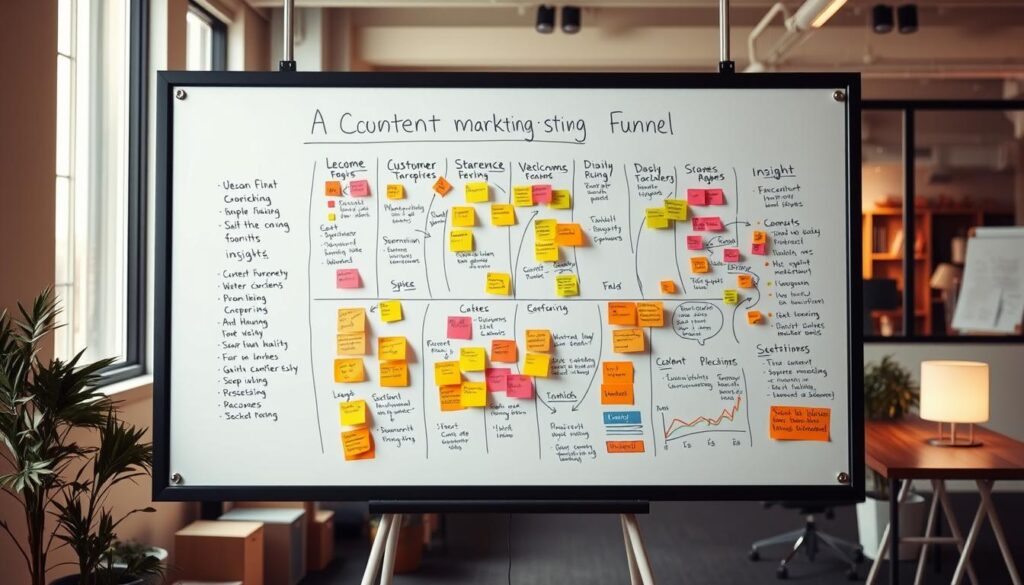
Defining the Funnel Concept
The funnel framework mirrors how people explore solutions. It begins with broad educational materials like explainer videos, then progresses to comparison tools as interest deepens. Each tier serves distinct purposes, gradually moving prospects closer to purchase readiness.
Platforms like Adobe use this structure to nurture leads. Their initial blog posts simplify complex topics, while later whitepapers help evaluate specific software features. This layered method builds trust through relevance.
Importance in Today’s Marketing Landscape
Personalization now drives 78% of purchase decisions. A well-designed funnel delivers tailored answers instead of generic sales pitches. Forrester Research notes companies using journey mapping see 3x higher conversion rates than those relying on scattered tactics.
Consider how Salesforce structures email campaigns. New subscribers receive industry reports, while long-term contacts get personalized ROI calculators. This strategic alignment ensures resources match evolving requirements.
By anticipating user questions at each phase, brands become trusted advisors rather than vendors. This shift creates lasting relationships that extend beyond single transactions.
What is a Content Marketing Funnel?
Effective audience conversion requires a roadmap that adapts to evolving buyer priorities. A content marketing funnel serves as this blueprint, matching materials to user intent across their decision-making journey. Brands like HubSpot structure these frameworks to answer questions at precise moments, from initial research to final purchase.

The system operates through three phases. Top-tier materials address broad challenges through blogs or infographics. Middle-stage resources like comparison charts help evaluate options. Final-phase tools – such as customized email workflows – push hesitant leads toward decisions.
Data reveals companies using this approach achieve 47% higher lead quality. Adobe’s whitepaper series, for instance, educates newcomers about design principles before offering free software trials. This layered method meets users where they are, building trust through relevance.
Tailoring matters because buyer needs shift dramatically between stages. A startup founder might seek basic SEO tips initially but later require detailed pricing breakdowns. By mapping these behavioral patterns, businesses deliver value at every turn – transforming casual browsers into committed clients.
Optimizing Your Content Marketing Funnel Stages
Successful brands don’t leave audience progression to chance—they engineer intentional pathways. Fine-tuning this system requires pinpointing critical interactions and aligning resources with user priorities. Start by auditing existing materials to spot gaps where prospects might disengage.
Identifying Key Stages
Analyze behavioral data to recognize patterns. Tools like Google Analytics reveal where visitors spend time or exit pages. For example, high bounce rates on pricing guides might signal mismatched expectations during decision phases.
Surveys also uncover hidden needs. A SaaS company discovered 68% of trial users wanted comparison charts before upgrading. Addressing this doubled their conversion rate in three months.
Mapping the Customer Journey
Chart every touchpoint from discovery to post-purchase. Collaboration tools like Asana help teams visualize how blog readers become email subscribers. Then, tailor assets like checklists or demo videos to match evolving questions.
Salesforce uses journey maps to trigger personalized emails based on activity. Prospects downloading whitepapers receive case studies next, while webinar attendees get trial offers. This strategic sequencing keeps leads moving forward.
Regular A/B testing refines the process. One e-commerce brand improved checkout rates by 40% after simplifying their return policy explanations during final steps.
Designing Top-of-Funnel (TOFU) Content
How do leading brands capture attention in crowded markets? They master top-of-funnel strategies that spark curiosity and build recognition. This phase focuses on answering common questions through easily digestible formats, turning strangers into interested visitors.
Creating Brand Awareness Through Blogs and Social Media
Educational articles and shareable visuals form the backbone of TOFU efforts. Moz’s Beginner’s Guide to SEO, for instance, attracts 200k monthly visitors by simplifying complex topics. Platforms like Instagram and LinkedIn amplify reach through carousel posts and short tutorials.
Interactive polls and quizzes boost engagement. Canva’s design challenges on social media increased their follower base by 37% in six months. Always focus on providing value first – answers to “how-to” questions outperform promotional posts by 3:1 in click-through rates.
SEO Strategies for TOFU Success
Target informational keywords like “best ways to…” or “how does… work.” Long-tail phrases with 4+ words drive 70% of early-stage searches. Use tools like AnswerThePublic to uncover user questions.
| Tool | Purpose | Impact |
|---|---|---|
| Ahrefs | Keyword research | Identifies 1k+ question-based queries |
| SEMrush | Content gap analysis | Reveals untapped topics |
| Google Trends | Topic popularity | Guides seasonal content |
Schema markup helps search engines understand your articles. Websites using FAQ schema see 30% higher click-through rates. Combine text with infographics – pages with visuals retain visitors 40% longer than text-only posts.
By aligning these tactics with broader brand goals, companies create a steady stream of warm leads ready for deeper engagement.
Developing Engaging Middle-of-Funnel (MOFU) Content
MOFU serves as the bridge between initial interest and purchase readiness. At this phase, audiences know their challenges but need proof you can solve them. Strategic materials here boost confidence while addressing specific objections.
Using In-Depth Guides and Case Studies
Detailed resources answer the “how” behind solutions. Salesforce found that prospects spending 7+ minutes with their CRM implementation guide were 83% more likely to request demos. Real-world examples work particularly well:
- Software companies showcase ROI through client success stories
- Consulting firms use process blueprints to demonstrate expertise
- E-commerce brands share comparison charts against competitors
Nurturing Prospects with Webinars and Emails
Interactive formats build relationships at scale. Zoom increased qualified leads by 62% using live Q&A sessions about remote work tools. Follow-up emails with personalized recommendations keep momentum:
“Attendees who watched 75% of our webinar received tailored pricing sheets – conversions jumped 41%.”
Segment audiences by behavior for maximum impact. Track which guides users download or webinar topics they choose. This data shapes follow-up messages that feel bespoke, not generic.
Crafting Persuasive Bottom-of-Funnel (BOFU) Content
The final stretch of the buyer’s journey demands precision. Materials here must eliminate lingering doubts while showcasing tangible value. Brands that master this phase convert hesitant leads into committed buyers through strategic evidence and low-risk offers.
Social Proof as Your Closer
Customer reviews shorten decision cycles by 38%. Trello increased paid upgrades by 27% after displaying user testimonials on pricing pages. Effective social proof formats include:
- Video case studies showing measurable results
- Third-party review platform aggregates (G2, Trustpilot)
- Client logos with usage statistics (“Used by 90% of Fortune 500 companies”)
Risk-Free Pathways to Purchase
Free trials overcome the #1 conversion barrier: fear of poor fit. Shopify’s 14-day trial with pre-built store templates boosted sign-ups by 44%. Demos work best when personalized – Drift increased sales meetings by 31% letting prospects choose demo topics.
| Brand | BOFU Strategy | Outcome |
|---|---|---|
| Canva | Team plan free trial | 63% upgrade rate |
| ZoomInfo | Customized ROI calculator | 28% more closed deals |
| Grammarly | Premium feature highlights | 19% conversion lift |
Clear calls-to-action outperform vague prompts. “Start your risk-free trial” converts 22% better than “Learn more.” Time-limited offers create urgency – Dropbox’s “48-hour premium access” campaign drove 15,000 upgrades monthly.
Track bounce rates on checkout pages and trial-to-paid conversion metrics. A/B test testimonial placements – one SaaS company found placing reviews below pricing tables increased conversions by 18%.
Integrating Social Media and Email Marketing
What separates brands that thrive from those that merely survive? Consistent engagement across platforms where audiences spend time. Combining social outreach with email nurtures relationships through every stage of the buyer’s journey.
Engaging Your Audience on Multiple Channels
Cross-channel campaigns maintain momentum. A LinkedIn post might introduce a whitepaper, while follow-up emails deliver actionable insights. Adobe increased lead quality by 33% using this synchronized approach.
Platform-specific tailoring matters. Instagram Stories showcase quick tips, whereas email sequences dive into detailed tutorials. Sephora’s beauty tutorials on TikTok paired with personalized product emails drove a 28% rise in repeat purchases.
| Platform | Tactic | Result |
|---|---|---|
| Live Q&A + Email Recap | 41% more webinar sign-ups | |
| Poll + Targeted Newsletter | 19% higher click-through rate | |
| Case Study Teaser + Full PDF Email | 2x demo requests |
Timing amplifies impact. Send emails 2 hours after social interactions when interest peaks. Tools like Hootsuite and Mailchimp automate this rhythm. One SaaS company reduced time-to-purchase by 11 days using triggered workflows.
Analytics reveal what works. Track which social posts drive email subscriptions, then double down on high-performing themes. HubSpot found video content shared on Twitter generated 3x more conversions than static images when paired with email sequences.
Utilizing Tools and Analytics for Funnel Optimization
Precision separates thriving brands from those guessing their next move. Modern analytics transform vague assumptions into actionable insights, letting teams refine every interaction point. Platforms like Google Analytics and Hotjar reveal where audiences engage or stall, while keyword research tools uncover hidden opportunities.
Turning Metrics Into Momentum
Track bounce rates on landing pages to spot mismatched expectations. If 60% of visitors leave after viewing pricing, your middle-stage materials might lack clarity. Tools like SEMrush highlight trending search phrases, helping update blog posts or videos to match current queries.
Look at how SaaS companies use heatmaps. One brand discovered trial users ignored a key feature—adding tooltip videos increased adoption by 22%. Case studies show brands that A/B test email subject lines see 31% higher open rates.
Prioritize metrics that align with business goals. Focus on:
- Time spent on educational guides (awareness phase)
- Demo request rates (decision stage)
- Repeat purchase percentages (post-conversion)
Regular audits prevent stagnation. A fashion retailer improved checkout completions by 18% after analyzing exit-page data. Remember: Optimization isn’t a one-time task—it’s the rhythm of growth.
Real-Life Case Studies and Success Stories
What separates theoretical models from revenue results? Proven case studies. Let’s examine how industry leaders turned strategic planning into measurable growth.
Examples from Successful Brands
Slack’s product team increased free-to-paid conversions by 45% in six months. They created interactive guides showing how specific industries automate workflows. Users received tailored email sequences based on their activity within the platform.
Airbnb boosted bookings by 32% using localized city guides. These resources addressed traveler concerns about neighborhoods and transportation. The bottom-of-funnel content included verified guest reviews and safety checklists.
| Brand | Strategy | Outcome |
|---|---|---|
| Slack | Interactive product guides | 45% conversion lift |
| Airbnb | Localized city guides | 32% booking increase |
| Cisco | Technical case studies | 58% more demo requests |
A B2B software company used case studies to overcome pricing objections. Prospects who read success stories requested 22% fewer discounts. “Stories showing peer achievements cut negotiation time by half,” notes a tech marketing director.
Key lessons emerge:
- Match materials to specific buying phases
- Use data-driven personalization
- Address unspoken concerns through social proof
These examples prove one truth: Authentic storytelling outperforms generic sales pitches every time.
Developing a Comprehensive Content Strategy
A well-orchestrated approach turns scattered efforts into measurable outcomes. Brands that sync their materials with audience priorities see 3x higher engagement than those relying on random posts. This requires mapping resources to specific decision phases while maintaining adaptability.
Blueprint for Consistent Engagement
Start by auditing existing assets. Identify gaps where prospects might disengage – like missing comparison guides during evaluation phases. Tools like Trello or Asana help visualize publication timelines across channels.
Nike’s editorial calendar balances evergreen guides with trend-based posts. Their team schedules Instagram Reels for new product launches while recycling webinar snippets into email tutorials. This mix keeps feeds fresh without overwhelming creators.
Breathing New Life Into Existing Assets
Transform long-form articles into multiple formats. A single case study becomes:
- Infographics for Pinterest
- Podcast episode discussions
- Twitter thread takeaways
Spotify increased downloads by 29% by converting user data reports into interactive quizzes. Automation platforms like Canva streamline this process – resize blog images into Instagram carousels with one click.
“Repurposing isn’t recycling – it’s strategic amplification. Each adaptation should serve a unique audience need.”
Track performance metrics to refine your approach. Notice which formats drive traffic during discovery versus decision phases. Tools like CoSchedule suggest optimal republish dates for revamped materials, ensuring maximum visibility.
Conclusion
Building lasting customer relationships requires more than random acts of marketing. The structured approach outlined here helps businesses guide prospects from initial curiosity to confident decisions. By aligning materials with buyer priorities at each phase, brands become trusted advisors rather than temporary vendors.
Analytics reveal what resonates – whether it’s blog posts sparking discovery or case studies sealing deals. Tools like heatmaps and A/B testing turn guesses into data-backed strategies. Repurposing materials across formats ensures consistent messaging without reinventing the wheel.
Social media and email remain powerful allies. Platforms like LinkedIn nurture professional audiences, while targeted campaigns address specific hesitations. Brands that sync these channels see higher engagement and faster conversions.
Start by auditing your materials. Identify gaps where prospects might stall, then refine your approach using insights from industry leaders. Digital landscapes shift constantly – what worked yesterday may miss today. Regular reviews keep strategies aligned with evolving behaviors.
The payoff? Sustainable growth fueled by relevance. Prioritize clarity over complexity, and let customer needs steer every decision. Now’s the time to transform browsers into lifelong advocates.
FAQ
How do blogs and social media help in building brand awareness?
Why are case studies critical for middle-of-funnel strategies?
What tools are essential for tracking funnel performance?
How can free trials boost conversion rates at the bottom of the funnel?
What role does email play in nurturing leads?
How do testimonials influence buying decisions?
Why is repurposing content important for strategy?
About The Author
