Local SEO for Home Services: A Complete Guide
In today’s digital-first world, standing out online is non-negotiable for businesses that cater to homeowners. Whether you’re a contractor or part of a larger team, optimizing your online presence can unlock steady growth. Consider this: 97% of consumers search for nearby solutions before making a decision, according to HubSpot. For industries like plumbing or HVAC, this means visibility is everything.
Effective strategies go beyond basic listings. For example, one service provider generated over $51,000 in ROI using targeted campaigns paired with search engine optimization. This guide dives into actionable methods to help your business rank higher, attract qualified leads, and reduce reliance on costly ads.
You’ll learn how to refine keyword research, optimize your website, and maximize tools like Google Business Profile. We’ll also explore how blending these tactics creates a sustainable pipeline of organic traffic. By the end, you’ll have a clear roadmap to compete locally while keeping marketing budgets efficient.
Key Takeaways
- Targeted optimization improves visibility for nearby customers searching for solutions.
- Case studies show campaigns can deliver significant returns, like $51,000 in revenue.
- Core strategies include keyword research, on-page adjustments, and profile management.
- Organic growth reduces pay-per-click expenses over time.
- This guide offers step-by-step methods tailored to contractors and service providers.
Understanding the Importance of Local SEO in Home Services
Connecting with customers starts where they search: their smartphones and computers. Local search optimization tailors your online presence to attract nearby customers. Consider this: 97% of people discover nearby businesses through digital channels, while 98% research options before contacting them. This shift makes visibility critical for contractors and repair specialists.

Why Local Visibility Matters for Service Companies
Being seen in search results builds credibility. Customers trust businesses that appear prominently for phrases like “emergency plumbing near me.” ServiceTitan boosted client bookings by 40% after refining profiles and customer reviews. Their approach included:
- Updating business hours and service areas
- Encouraging clients to leave detailed feedback
- Posting before-and-after project photos
Impact on Customer Engagement and ROI
Visibility directly fuels revenue. Companies ranking on the first page capture 36% of clicks, according to recent studies. Optimized profiles and content also reduce reliance on paid ads, lowering cost per lead by up to 60%.
| Strategy | Engagement Boost | ROI Improvement |
|---|---|---|
| Profile Optimization | 28% | 22% |
| Review Management | 34% | 18% |
| Content Creation | 19% | 27% |
This process creates a cycle: better visibility drives more inquiries, which generates positive data, further improving rankings. The results? Steady growth without overspending on ads.
Essential Keyword Research Strategies for Home Services
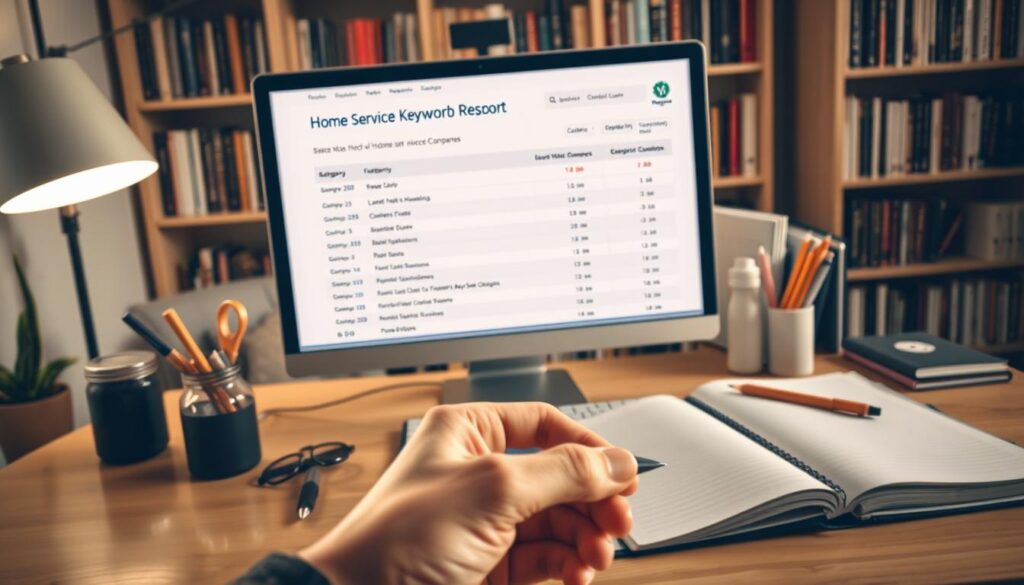
Effective online discovery begins with understanding what potential customers are searching for. Start by identifying core terms like “plumbing repair” alongside location-specific phrases such as “Austin Plumbing.” Long-tail variations like “clogged toilets in Austin” often attract more qualified leads, as they reflect urgent needs.
Identifying Core and Niche Keywords
Tools like Google Autocomplete reveal popular queries as users type. For example, typing “water heater” might suggest “water heater installation cost” or “emergency replacement.” These insights help craft content that answers real questions. Prioritize terms with manageable competition and clear intent.
Utilizing Tools and Search Trends
Platforms like AnswerThePublic analyze “People Also Ask” sections, uncovering hidden opportunities. Seasonal trends matter too—searches for “AC repair” spike in summer. Pair this data with tools like SEMrush to balance search volume and relevance. A well-rounded strategy might include:
- Headings (H1/H2) featuring primary keywords
- Service pages optimized for geo-targeted phrases
- Regular updates based on trend shifts
Businesses that align their content with search behavior see faster organic growth. For instance, a Texas-based HVAC company doubled website traffic by integrating terms like “energy-efficient AC installation” into their blog. Learn more about refining these tactics in this step-by-step guide.
Optimizing Your Google Business Profile
Your Google Business Profile acts as a digital storefront for contractors and repair specialists. When optimized correctly, it becomes a powerful tool to attract nearby customers searching for solutions. Research shows businesses with complete profiles receive 2x more website clicks than those with missing information.
Setting Up and Verifying Your Profile
Start by claiming your profile through Google’s Business Profile Manager. Use your exact business name and physical address—even small discrepancies can confuse search engines. Verification typically involves receiving a postcard with a unique code within 5-7 days.
Essential details include:
- A local phone number (not a call center)
- Accurate operating hours, including holidays
- A 750-character description highlighting specialties like “24/7 emergency repairs”
Best Practices for Details and Media
High-quality visuals build credibility. ServiceTitan found businesses uploading 10+ photos see 42% more requests for directions to their location. Showcase before-and-after project images and team photos to humanize your brand.
Regular updates matter. A plumbing company boosted map pack visibility by 35% after adding service area updates and responding to reviews weekly. Consistency across platforms also helps search engines validate your business legitimacy.
For a deeper dive into profile enhancements, explore this step-by-step optimization guide. Remember: active profile management creates lasting visibility without relying solely on paid ads.
Mastering On-Page SEO for Home Service Websites
Your website’s foundation determines how easily customers find you online. Technical adjustments and strategic content organization help search engines understand your offerings while guiding visitors toward conversion.
Optimizing HTML, Titles, and Meta Descriptions
Start with title tags that blend relevance and clarity. A plumbing company might use: “Emergency Plumbing Services | [City Name] | 24/7 Repairs”. Keep titles under 60 characters to avoid truncation in results.
Meta descriptions should summarize page intent while encouraging clicks. For example: “Need same-day AC repair? Our certified technicians offer fast, affordable solutions. Schedule your service now!” Include primary keywords naturally, but prioritize readability.
Creating SEO-Friendly URLs and Structured Content
Simplify URLs to reflect page topics. Instead of “/blog?id=123”, use “/emergency-plumbing-services-austin-tx”. This improves crawlability and user trust.
Organize content with headers (H2/H3) and bullet points. A heating company might structure a service page with sections like “Common HVAC Issues” followed by subheadings detailing specific problems. Internal links to related pages (e.g., “Learn about our maintenance plans”) keep visitors engaged.
Make sure to audit existing pages quarterly. Check for broken links, duplicate titles, or outdated metadata. Tools like Screaming Frog identify technical gaps quickly. Consistent optimization builds authority over time, turning your site into a lead-generation engine.
Creating High-Quality Content for Home Service Companies
Educational content bridges the gap between customer questions and your expertise. When homeowners face urgent repairs or costly upgrades, they seek clear answers. Articles that address these needs position your business as a trusted advisor while improving search rankings.
Developing Informative and Engaging Articles
Focus on practical guides that simplify complex tasks. For example, an HVAC company could publish “How to Unclog Your AC Condensate Drain Line in 4 Steps”. These pieces attract organic traffic while demonstrating technical proficiency. Other proven formats include:
- Cost breakdowns for common projects (e.g., “2024 Water Heater Installation Pricing”)
- Interactive tools like ROI calculators for energy-efficient upgrades
- Seasonal checklists for system maintenance
Using Content to Address Customer Pain Points
Homeowners often feel overwhelmed by repair decisions. Data-backed articles reduce anxiety by providing actionable solutions. A plumbing company might analyze local water quality trends to recommend filtration systems, using charts to visualize benefits.
| Content Type | Primary Benefit | Secondary Benefit |
|---|---|---|
| How-To Guides | Builds Trust | Educates Customers |
| Cost Pages | Reduces Hesitation | Filters Quality Leads |
| Case Studies | Demonstrates Expertise | Supports Upselling |
Consistency matters. Businesses publishing monthly blogs see 3x more organic traffic within a year compared to sporadic posters. Fresh content also strengthens domain authority, making it easier to rank for competitive terms. For a comprehensive guide to home service content strategies, explore this resource.
Well-crafted articles have extended value. They can be repurposed into social media snippets, email newsletters, or video scripts – maximizing reach without additional创作成本.
Building Backlinks and Local Citations
Establishing authority in your market requires more than just a polished website—it demands strategic partnerships and meticulous attention to detail. Backlinks (links from other sites to yours) and local citations (mentions of your business name, address, and phone number) signal credibility to search engines. Companies with strong profiles in these areas often see faster ranking improvements and sustained traffic growth.
Effective Link Building Tactics
Quality matters more than quantity. Focus on earning links from reputable industry websites like Angi or trade associations. For example, Blue Corona increased organic traffic by 58% for a client through guest posts on regional home improvement blogs. Tactics include:
- Collaborating with influencers for project showcases
- Publishing data-driven reports on repair trends
- Sponsoring community events with digital coverage
Managing Consistent NAP Citations
Inaccurate listings confuse customers and algorithms. A plumbing company improved map rankings by 29% after fixing address discrepancies across 15 directories. Use tools like BrightLocal to audit and update your business information on platforms like Houzz and Yelp. Key details to verify:
- Exact spelling of your business name
- Uniform service area descriptions
- Matching contact information
Encouraging Impactful Reviews
Positive feedback builds trust and influences rankings. ServiceTitan users report a 33% increase in bookings after implementing automated review requests post-service. Simplify the process by:
- Sending SMS review links within 24 hours of job completion
- Training teams to mention reviews during follow-ups
- Responding professionally to all feedback
Monitor your backlink profile monthly using Ahrefs or Moz. Avoid shortcuts like paid links—search engines penalize these practices. Consistent effort here compounds over time, driving measurable results without inflating ad budgets.
local seo for home services
Tailoring your digital strategy to neighborhood-level searches transforms how homeowners discover your business. Geo-targeting focuses your visibility where it matters most – the streets and zip codes you serve. This approach matches customer intent with hyper-relevant content, driving higher conversion rates.
Strategic Keyword Integration
Embed location-specific phrases naturally into service pages. A roofing company might use “Asheville storm damage repair” instead of generic terms. Tools like Google Keyword Planner reveal trending queries in specific areas. Combine these with:
- Neighborhood names in title tags
- City-specific service descriptions
- Landing pages for each major town
Community-Centric Content Development
Build trust through localized insights. A plumbing company created separate pages for “Phoenix water heater permits” and “Tucson leak detection”, resulting in 50% more form submissions. Highlight regional pain points like:
- Common local infrastructure issues
- Area-specific building codes
- Neighborhood service boundaries
Make sure NAP (Name, Address, Phone) consistency appears on every location page. This technical detail helps search engines validate your service areas. Companies using this method often see 20-35% improvements in map pack rankings.
Case in point: An electrical contractor doubled website traffic by adding zip-code-filtered project galleries. They paired this with blog posts analyzing energy costs in different counties. This localized approach created multiple entry points into their sales funnel.
Advanced Strategies and Tools for SEO Success
Data-driven decisions separate thriving businesses from stagnant ones in competitive markets. Sophisticated tracking and analysis tools reveal patterns that basic methods miss, helping refine strategies for maximum impact.
Leveraging Analytics and Tracking Software
Platforms like Google Analytics provide real-time insights into user behavior. Track metrics such as:
- Page dwell time for service-specific content
- Mobile vs desktop conversion rates
- Goal completion paths for contact forms
Call tracking systems add another layer, showing which campaigns drive phone inquiries. Blue Corona clients improved lead quality by 41% using this dual approach.
Using Competitor Analysis to Refine Tactics
Identify gaps in competitors’ strategies through tools like Ahrefs. One electrical contractor discovered 12 underserved keywords in their metro area, capturing 18% more organic traffic within 90 days. Focus on:
- Backlink sources they dominate
- Content formats generating engagement
- Local listing inconsistencies
Innovative Tools for Content and Link Optimization
AI-powered platforms like Clearscope analyze top-performing content, suggesting optimizations for better search visibility. For link building, Hunter.io streamlines outreach by identifying decision-makers at industry publications.
Regular A/B testing remains crucial. Try different meta descriptions monthly and monitor click-through rate changes. Companies making weekly data adjustments see 27% faster ranking improvements compared to quarterly updaters.
Conclusion
Building a dominant online presence requires combining proven tactics with strategic refinement. This guide outlined how targeted engine optimization boosts visibility in search results while reducing reliance on paid ads. From keyword research to profile management, each component builds credibility with both algorithms and customers.
Case studies demonstrate real impact. Contractors using these methods achieved 40% more bookings, while others generated $51,000 in revenue through organic growth. Advanced analytics help maintain momentum – tracking metrics like click-through rates ensures continuous improvement over time.
Successful businesses treat these strategies as living systems. Regular updates to content, backlink profiles, and technical details keep websites competitive. Prioritizing accurate listings and customer reviews also strengthens trust with local communities.
Now is the moment to act. Implement these actionable steps to position your business ahead of competitors. The long-term benefits – sustained growth, higher-quality leads, and efficient marketing budgets – make the effort worthwhile. Start refining your approach today to secure tomorrow’s success.
FAQ
How does optimizing a Google Business Profile help service businesses?
What tools are effective for keyword research in service industries?
Why are backlinks critical for improving search rankings?
How can businesses address customer concerns through content?
What role do online reviews play in local search performance?
Why is geo-targeting important for service area businesses?
How often should service companies audit their SEO strategy?
About The Author
