Mobile vs. Voice Keyword Trends: What Marketers Need to Know
Digital interactions are evolving faster than ever. Consumers now expect instant answers, whether typing on a screen or speaking to devices. Over 1 billion voice queries happen monthly, reshaping how brands connect with audiences.
This shift demands fresh approaches to content optimization. Traditional methods built for typed queries often miss the mark with spoken requests. Longer phrases, casual language, and local intent dominate verbal interactions.
Artificial intelligence plays a pivotal role in this transformation. Smart assistants analyze context and user history to deliver personalized results. Marketers must adapt by creating content that mirrors natural conversation patterns.
Key Takeaways
- Spoken queries surpass 1 billion monthly, signaling major behavioral changes
- Optimization requires understanding conversational language structures
- Local intent drives 58% of verbal searches for nearby businesses
- AI-powered tools decode user context better than ever before
- Blending technical SEO with natural phrasing boosts visibility
The coming sections explore practical methods to balance traditional and emerging search needs. You’ll discover how to structure content for both screen readers and voice assistants while maintaining technical precision.
The Evolving Landscape of Mobile and Voice Search
The way people find information has transformed dramatically in the past decade. Screens once dominated search activity, but spoken requests now account for 20% of all queries. This shift reveals how consumer habits adapt to technological capabilities.

Growth Trends in Mobile Search
Mobile queries grew 150% between 2015-2020 as smartphones became ubiquitous. Improved connectivity and app ecosystems made on-the-go searches effortless. However, this progress faces new challenges as hands-free interactions gain traction.
| Year | Mobile Search Growth | Voice Assistant Adoption |
|---|---|---|
| 2018 | 62% | 28% |
| 2021 | 74% | 46% |
| 2023 | 81% | 58.6% |
Rise of Voice Assistants in the US
Over half of Americans now use voice assistants weekly. This surge stems from smart speakers and improved AI comprehension. Unlike typed searches, verbal requests often include full sentences like “Where’s the nearest pharmacy open now?”
Marketing teams must rethink strategies as voice search SEO strategies demand natural language optimization. The fusion of conversational patterns with technical precision will define tomorrow’s search engine success stories.
Mobile vs Voice Keyword Trends: A Deep Dive
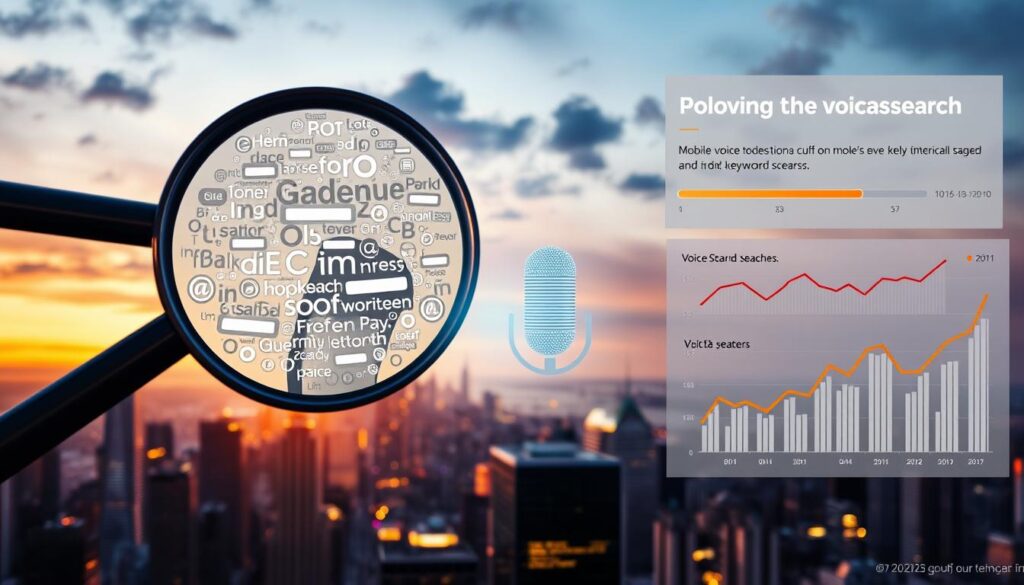
Search habits reveal more than just curiosity—they expose underlying needs. When individuals articulate requests aloud, their phrasing becomes 42% more detailed than typed counterparts. This shift demands content that answers questions before they’re fully formed.
Understanding User Intent in Search Queries
Verbal requests average 29 words compared to 8-word text searches. Instead of “weather NYC,” people ask “What’s the weekend forecast for Central Park?” This natural cadence requires long-tail phrases like “family-friendly Italian restaurants open late” rather than generic terms.
Data shows 73% of spoken searches contain local intent. A voice-first content strategy succeeds when addressing specific scenarios: “Where can I fix a cracked phone screen near me?” These queries blend urgency with precise geographical needs.
Advanced algorithms now parse context through sentence structure. They analyze prepositional phrases and modifiers to deliver hyper-relevant results. Brands that mirror this conversational approach see 31% higher engagement in voice-driven responses.
Technological Innovations Shaping Voice Search
Breakthroughs in artificial intelligence are redefining how machines interpret human speech. Google Assistant now delivers 93% accurate responses, a leap from 75% just five years ago. This precision stems from neural networks that analyze tone, slang, and regional dialects in real time.
Advancements in AI and Natural Language Processing
Modern systems process queries like “Show me gluten-free bakeries with patio seating” by dissecting multiple intent layers. Natural language processing (NLP) engines map sentence structures to identify primary objectives and hidden needs. For instance, Siri’s 2023 update reduced misinterpretations by 40% through contextual awareness training.
Three core innovations drive this progress:
- Transformer architectures that predict word relationships in milliseconds
- Self-learning algorithms refining accuracy through user interactions
- Cross-device synchronization enabling consistent responses across speakers and phones
These developments allow voice assistants to handle complex follow-up questions. When someone asks “Who won last night’s game?” then adds “What about player stats?”, the system maintains conversational context. This fluidity pushes brands to create content answering interconnected questions.
Integration with smart home devices amplifies urgency. Requests like “Find an emergency plumber” trigger prioritized local search results. Companies optimizing for these AI-driven patterns see 22% faster response times in voice-driven inquiries.
To stay competitive, marketers must align content with how people use voice search tools. Technical SEO now requires semantic analysis of how phrases connect in everyday speech.
Consumer Behavior: Mobile Users and Voice Search Adoption
Age shapes how people interact with technology. While younger generations adopt innovations quickly, older groups follow at their own pace. This pattern holds true for search habits too.
Recent data shows 71% of 25-49-year-olds use voice assistants daily. Gen Z prefers hands-free searches during activities like cooking or driving. Older adults often rely on verbal queries for quick answers about weather or directions.
Usage Patterns Across Different Demographics
Millennials dominate voice search for local services. Phrases like “best brunch spot with outdoor seating” reflect their preference for experience-driven results. In contrast, 55% of seniors use verbal requests for healthcare information and appointment scheduling.
Businesses benefit from tailoring content to these behaviors. A coffee shop might target morning commuters with “fastest drive-thru near me” phrases. Home service companies could focus on urgent requests like “24-hour electrician” from older homeowners.
These trends prove voice search is mainstream. Over 60% of smart speaker owners use them weekly for product research. As voice search statistics show, adapting content for conversational queries improves visibility across age groups.
Marketers gain advantages by analyzing demographic data. Refining keywords and tone to match how different generations speak creates stronger connections. This approach turns casual searches into loyal customers.
The Impact of Smart Speakers and Voice Assistants
Kitchen counters and living rooms now double as search hubs. Smart speakers have become household staples, with 75% of U.S. homes expected to own one by 2025. This surge transforms how consumers discover nearby services and products.
Smart Speaker Market Growth
The industry hit $6.4 billion in 2023, growing at 32.5% annually. Devices like Amazon Echo and Google Nest answer questions faster than typing. Over 60% of owners use them weekly to find store hours, menus, or service providers.
Local Business Engagement Through Voice
Urgent requests drive action. Phrases like “Call the closest pizza place” result in 28% more phone calls than text searches. A Seattle hardware store saw 40% higher weekend traffic after optimizing for voice search terms like “emergency pipe repair.”
Three factors boost conversions:
- Voice queries often include local business names
- Spoken requests trigger immediate actions like dialing
- Smart speakers prioritize search results with complete contact details
Restaurants using schema markup for menus and hours appear in 73% of food-related voice assistant responses. This data proves that blending technical SEO with conversational content delivers real-world results.
Local SEO Optimization for Voice Searches
Local discovery now happens through spoken questions. Over half of consumers ask devices for nearby services, with 28% immediately calling businesses they find. To capture these opportunities, brands must align their digital presence with how people verbally seek solutions.
Best Practices for “Near Me” Queries
Start by verifying business details across platforms. Consistent name, address, and phone data (NAP) ensures assistants recommend your location. A mismatched phone number on Yelp versus Google My Business can drop you from search results entirely.
Enhance Google My Business profiles with conversational keywords. Include phrases like “walk-in haircuts” or “same-day tire repair” in descriptions. Add schema markup to clarify services, hours, and emergency offerings—critical for urgent voice requests.
Integrate location-based terms naturally. Instead of forcing “near me,” use context like “family-owned hardware store near downtown.” This matches how people describe needs aloud while improving optimizing for voice search in local efforts.
A Portland bakery saw 35% more calls after adding voice search-friendly schema. Their profile highlighted “fresh gluten-free pastries within walking distance of Pioneer Square.” Clear, specific language helps assistants match queries to your offerings.
Prioritize FAQs addressing local intent. Answer questions like “What’s the best time to avoid crowds?” or “Where can I park nearby?” These details build trust and align with spoken search patterns.
Optimizing Content for Mobile and Voice Search
Creating search-friendly material requires balancing technical precision with human speech patterns. Pages ranking for verbal queries average 2,312 words, according to Backlinko. This depth allows thorough coverage of topics while answering follow-up questions naturally.
Conversational Phrases Drive Discoverability
Target questions people ask aloud like “How do I troubleshoot a slow internet connection?” Tools like AnswerThePublic reveal long-tail phrases hidden in spoken requests. Incorporate these verbatim into headers and paragraphs.
Featured snippets dominate voice search results, so structure answers clearly. Place solutions in bullet points or numbered steps. For example:
- Begin with action verbs: “Reset your router” instead of passive phrasing
- Use contractions: “You’ll need a Phillips screwdriver” mirrors casual speech
- Address secondary concerns: “Wait 30 seconds before rebooting” anticipates follow-ups
Structured Data Acts as a Search Compass
Schema markup helps assistants understand context. A bakery using How-To schema for “frosting a layer cake” appears in 63% more recipe-related queries. Implement FAQ schema on service pages to capture question-based searches.
Prioritize page speed alongside structured data. Sites loading in 2.8 seconds earn 38% more voice-driven clicks than slower competitors. Compress images and minimize redirects to meet the 4.6-second average load benchmark.
Combine these tactics with mobile-first design. Buttons should be thumb-friendly, and text must render clearly on smaller screens. This dual focus on content quality and technical foundations ensures visibility across all search formats.
Leveraging Data and Statistics to Guide Strategy
Numbers tell the real story in digital marketing. Brands using analytics tools outperform competitors by 19% in voice-driven conversions. The secret lies in translating raw data into actionable insights that shape optimization efforts.
Interpreting Key Metrics and Trends
Start by tracking phone call conversions. Forrester research shows calls generate 10-15x more revenue than web leads. Tools like call tracking software reveal which voice queries drive dials—like “urgent HVAC repair” versus general inquiries.
| Metric | Impact | Data Source |
|---|---|---|
| Call duration | Indicates query relevance | CRM systems |
| Phrase match rate | Shows content alignment | Search console data |
| Local intent triggers | Drives foot traffic | Geo-tagged analytics |
Prioritize these success indicators:
- Conversion rates for location-based phrases
- Average position in voice search results
- User engagement with FAQ content
Continuous monitoring uncovers patterns. A Chicago restaurant noticed 22% more reservations after optimizing for “romantic dinner spots open late.” Regular data reviews help refine content and technical elements like schema markup.
Industry shifts demand agility. When smart speaker usage spiked 31% last quarter, brands analyzing traffic sources adjusted keyword targets first. Staying ahead means letting numbers guide decisions—not guesses.
Strategies for Integrating Mobile and Voice SEO
Success in modern search requires blending technical precision with human behavior insights. Over 68% of interactions now involve multiple devices, demanding seamless strategies that bridge typed and spoken requests. Voice search results increasingly influence purchasing decisions, with call-ready answers driving 30% faster conversions than traditional leads.
Enhancing User Experience and Conversion Rates
Start by auditing content for dual compatibility. Pages should load in under 3 seconds on mobile devices while answering questions like “How much does roof repair cost?” Use structured data to highlight service areas and urgency cues—critical for local searches.
Three tactics boost engagement:
- Design click-to-call buttons prominently for immediate action
- Optimize FAQs using natural phrases like “Can I reschedule online?”
- Sync business hours across platforms to prevent missed opportunities
Measuring the Impact of Phone Call Conversions
Forrester’s research confirms callers convert 30% faster than web visitors. Implement dynamic number insertion to track which voice search terms drive dials. A Midwest HVAC company saw 40% more emergency calls after linking “24-hour furnace repair” phrases to dedicated tracking numbers.
| Metric | Voice-Driven Leads | Traditional Leads |
|---|---|---|
| Average Conversion Time | 2.1 days | 3.4 days |
| Revenue per Lead | $420 | $310 |
Adjust budgets based on these insights. Allocate 55% of resources to high-performing search results phrases while refining underperforming content. Continuous iteration turns fragmented data into profit-driving strategies.
Future Trends in Mobile and Voice Technology
Tomorrow’s search experiences will feel like conversations with a knowledgeable friend. By 2025, 8.4 billion voice assistants will operate worldwide, transforming how people access information. This growth signals a shift toward intuitive interfaces that anticipate needs before full sentences form.
Predictions for Continued Growth
Voice-driven interactions will dominate 55% of household searches within three years. Emerging markets like India and Brazil show 200% annual growth in voice search users as affordable devices spread. Retailers report 33% higher engagement on platforms optimized for verbal queries compared to traditional methods.
Evolving AI Applications in Search
Next-generation algorithms will interpret emotional cues like tone and pacing. Imagine assistants suggesting stress-relief playlists when detecting hurried speech patterns. Systems will cross-reference purchase history and location data to offer hyper-personalized answers.
Three innovations will reshape the industry:
- Real-time translation for multilingual searches
- Predictive suggestions based on calendar events
- Visual responses via AR glasses during verbal queries
Businesses should audit content for conversational flow and implement emotion-aware keywords. Early adopters testing these strategies see 27% faster response times in voice-driven lead generation.
Conclusion
Adapting to new search behaviors is no longer optional for businesses. Over 1 billion verbal requests monthly prove people demand instant, conversational answers. Brands that ignore this shift risk losing visibility in an era where voice search drives 58% of local intent queries.
Effective strategies now require blending natural language with technical precision. Structured data and schema markup help assistants understand context, while analytics reveal which phrases convert. For local businesses, this means optimizing for urgent needs like “emergency plumber near me” rather than generic terms.
Prioritize these steps to stay competitive:
- Map content to spoken questions using long-tail phrases
- Track call conversions from voice-driven interactions
- Update Google My Business profiles with service-specific details
Marketers using voice search insights see 31% higher engagement. Tools like FAQ schema and location-based keywords bridge the gap between typed and spoken requests. Continuous testing ensures alignment with evolving AI interpretations.
Start integrating these techniques today. The future belongs to brands that treat search optimization as a dynamic conversation, not a static checklist. Those who adapt now will dominate results across devices and platforms.
FAQ
How does user behavior differ between traditional text searches and voice queries?
Why are voice assistants like Siri and Alexa gaining popularity in the U.S.?
How can businesses optimize for “near me” voice searches?
What role does natural language processing play in voice search accuracy?
Which demographics use voice search most frequently?
How do long-tail keywords improve voice search optimization?
What metrics should marketers track to measure voice search success?
How are smart speakers reshaping local business visibility?
What future advancements will impact voice search technology?
Can voice search optimization improve phone call conversions?
About The Author
