SEO Split Testing Tools for Effective SEO Optimization Strategies
In today’s competitive digital landscape, guessing which website changes improve rankings rarely works. Businesses need reliable methods to identify what truly impacts organic visibility. This is where structured experimentation, like A/B testing for search performance, becomes essential.
Platforms such as SearchPilot and SEOTesting enable teams to test changes on specific pages without risking sitewide performance. For example, altering meta tags on one product page while keeping others unchanged helps isolate what drives results. This approach eliminates assumptions and replaces them with actionable insights.
Unlike traditional conversion rate tests, these experiments focus purely on search behavior. Metrics like click-through rates or keyword rankings reveal how adjustments influence discoverability. Leaders in e-commerce and SaaS rely on tools like SplitSignal and seoClarity to run these tests efficiently.
By prioritizing data over hunches, companies avoid costly missteps. Even minor tweaks—such as adjusting header structures or internal links—can lead to measurable traffic gains when validated through controlled trials.
Key Takeaways
- Structured testing removes guesswork from optimization efforts
- Platform-specific experiments prevent sitewide performance risks
- Search-focused A/B testing differs from conversion rate analysis
- Industry leaders use specialized tools for precise results
- Small, validated changes often create significant traffic improvements
Introduction to SEO Split Testing
Digital marketers can no longer rely on intuition alone. Even minor website adjustments—like rewording a headline or updating image alt text—can sway rankings unpredictably. This unpredictability fuels demand for precise experimentation methods that isolate variables and measure real impact.
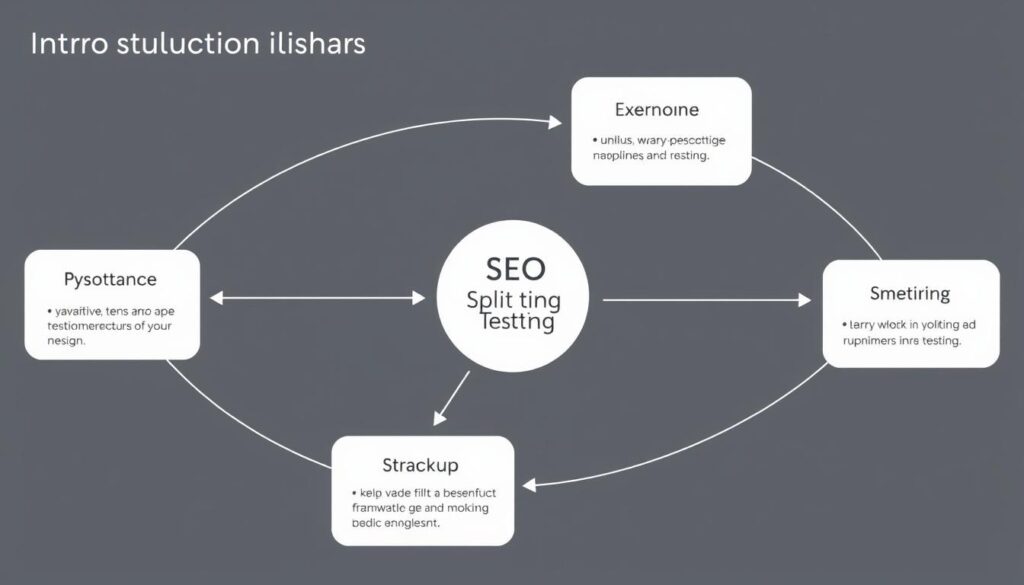
Why Testing Is Critical for Success
Consider updating meta descriptions sitewide without validation. One study found pages with tested titles saw 37% more clicks than untested versions. Structured experimentation prevents such gambles by letting teams compare versions on specific pages first.
Unlike traditional conversion tests that divide traffic, this approach creates page variations. Search algorithms evaluate these independently, ensuring compliance with guidelines. For instance, altering header structures on a landing page while keeping others unchanged reveals what truly drives visibility.
Comparing Methodologies
Conversion optimization focuses on user actions like purchases. Search-focused tests track metrics like keyword rankings and impressions. Tools automate this process, letting marketers test hypotheses about:
- Title tag variations
- Internal linking strategies
- Content length adjustments
Multivariate testing takes this further by examining multiple changes simultaneously. A travel site might test both redesigned product cards and revised meta titles on the same hotel listings page. This dual analysis clarifies which adjustments boost search engine performance without cross-influence.
By validating changes through controlled trials, businesses reduce risks while scaling winning strategies. Even landing page elements like schema markup or video placements become measurable growth levers when tested properly.
Understanding SEO Split Testing Fundamentals
Accurate measurement replaces guesswork when optimizing for search visibility. This approach treats website changes like scientific experiments, isolating variables to measure true impact.

Defining A/B Testing for Search Performance
Search-focused A/B testing divides pages into two groups: control (original version) and variation (modified version). Unlike traffic-splitting methods, this ensures search engines index both versions independently. Key applications include:
- Validating title tag adjustments across product categories
- Testing alt text variations on high-traffic images
- Comparing content depth in service descriptions
Contrasting Search and Conversion Testing
Traditional conversion optimization tracks purchases or sign-ups. Search experiments focus on how user behavior signals influence rankings. For example:
- Click-through rates from search results
- Time spent on page after organic clicks
- Bounce rate comparisons between versions
A retail site tested two title formats for winter coats. The version with price ranges saw 22% more clicks despite identical rankings. This shows how user experience cues in titles affect actual search behavior.
By analyzing these signals, teams refine their testing process to prioritize changes that align with both searcher intent and algorithmic preferences. This dual focus turns minor tweaks into measurable visibility gains.
Key Benefits of Implementing SEO A/B Tests
Businesses face countless variables influencing search performance. Structured experimentation cuts through the noise by turning hunches into actionable strategies backed by measurable results.
Data-Driven Decision Making
Platform dashboards reveal how title tag variations or content adjustments impact rankings. One SaaS company increased click-through rates by 41% after analyzing which meta descriptions users preferred. “You can’t argue with numbers,” notes a marketing director who reduced bounce rates by testing header structures.
Real-time reporting helps teams spot trends quickly. For example, an e-commerce site discovered shorter product descriptions outperformed detailed ones in mobile searches. This insight reshaped their content strategy across 12 product categories.
Improving Organic Traffic and Rankings
Validated changes create compounding visibility gains. A travel blog boosted organic visits by 28% after testing and scaling image alt text optimizations. Another case saw a local service provider climb from page three to page one for competitive keywords within six weeks.
Key advantages include:
- Pinpointing which changes drive actual ranking improvements
- Eliminating wasted effort on ineffective tactics
- Building repeatable processes for sustained growth
By aligning website adjustments with verified user behavior, businesses turn uncertainty into predictable progress. This approach transforms minor tweaks into major competitive advantages.
Critical Features to Consider in Testing Tools
Choosing the right platform for website experiments requires careful evaluation. Core functionalities determine whether teams can execute tests efficiently while maintaining site performance.
Integration Capabilities and Reporting Dashboards
Top-tier solutions connect seamlessly with existing workflows. Compatibility with platforms like WordPress or Shopify ensures changes deploy quickly without breaking layouts. Built-in connectors for Google Search Console automatically pull ranking data, turning raw numbers into actionable insights.
Advanced dashboards track multiple metrics simultaneously. One case study showed marketers reduced analysis time by 63% using customizable reports that highlight click-through rate changes and keyword movements. Visual heatmaps and trend lines make complex data accessible at a glance.
Speed matters when modifying pages. Leading tools use lightweight code snippets that load in under 50 milliseconds. This prevents slowdowns while testing header adjustments or internal links across product categories.
For example, integrating with analytics platforms lets teams compare organic traffic shifts against conversion rates. A financial services company used this approach to validate title tag updates, resulting in 19% more form submissions from search visitors.
Effective platforms also support bulk changes. As highlighted in this guide to structured experiments, scaling proven strategies across hundreds of pages becomes practical with the right feature set. Real-time alerts notify teams when tests achieve statistical significance, preventing premature conclusions.
seo split testing tools
Not all page experiments require complex setups—specialized platforms simplify the process. Unlike generic A/B testing software, these solutions focus on search-specific metrics like crawl behavior and keyword movements across variants.
Leading platforms enable granular control over which pages receive changes. For example, testing meta description rewrites on 5% of product listings isolates their impact before sitewide rollout. This prevents unintended ranking drops while validating hypotheses.
Traffic analysis becomes actionable through real-time dashboards. One case study showed how adjusting header structures on service pages increased organic clicks by 19% within three weeks. Tools automatically flag statistically significant results, eliminating manual guesswork.
Key differentiators include:
- Page-specific change tracking without affecting site speed
- Automated traffic impact projections based on historical data
- Compliance checks to avoid penalties during experiments
Platforms like SEOTesting use time-based comparisons, measuring how tweaks perform across algorithm updates. Others offer multivariate capabilities—testing title tags and internal links simultaneously on high-value pages.
By focusing on measurable outcomes rather than assumptions, teams turn minor adjustments into consistent traffic gains. As one analyst noted: “Controlled page tests reveal what actually moves the needle.”
Product Roundup: SearchPilot
Businesses navigating website optimizations need precise solutions that balance power with practicality. SearchPilot delivers this through server-side experimentation designed for controlled validation of page-level adjustments.
Core Features and Unique Selling Points
SearchPilot’s server-side approach splits page variations instead of users. This eliminates cookie dependency and ensures search engines index both original and modified content accurately. Key capabilities include:
- Meta CMS for bulk editing titles/descriptions across templates
- Full-funnel tracking from crawl behavior to conversion impacts
- Built-in statistical confidence calculators
One enterprise reduced deployment risks by testing navigation changes on 15% of product pages first. The platform’s traffic projection models helped them scale successful updates sitewide without guesswork.
User Experience and Deployment Challenges
While powerful, some users report a steep learning curve. The interface’s advanced customization options can overwhelm new teams. Response times for technical support occasionally lag during peak periods.
However, businesses find value in automated compliance checks that prevent accidental guideline violations. A media company safely tested schema markup changes across 2,000 articles using these safeguards. As one developer noted: “It catches errors before they become ranking disasters.”
Strategic users pair SearchPilot’s reporting with existing analytics tools. This combination helps teams validate whether layout changes improve both visibility metrics and engagement rates over time.
Product Roundup: seoClarity
Modern optimization demands precision—not hunches. seoClarity delivers this through its science-first approach, combining enterprise-grade analytics with intuitive workflows. Built for teams managing large-scale websites, it transforms raw metrics into actionable strategies.
Streamlined Workflow and Data-Driven Insights
The platform’s dashboard simplifies tracking thousands of keywords across locations. One retailer used city-level data to discover regional search pattern differences, boosting local traffic by 33%. Built-in statistical models automatically flag significant changes, reducing analysis paralysis.
Marketers appreciate reduced technical barriers. Unlike many solutions requiring coding expertise, seoClarity lets teams modify titles or meta descriptions through visual editors. A/B comparisons run directly within the interface, showing how variations impact rankings and impressions over time.
Key strengths include:
- Granular geographic performance tracking for multi-location businesses
- Automated alerts for ranking fluctuations tied to site changes
- Collaboration features that streamline cross-department workflows
While powerful for organic strategies, some users note limited paid search integrations in certain plans. However, its focus on measurable outcomes makes it ideal for enterprises prioritizing evidence-based optimizations. As one analytics manager stated: “We cut decision time by half while doubling impact.”
Product Roundup: SEOTesting
Modern enterprises require precise methods to validate website adjustments without disrupting performance. SEOTesting addresses this need through time-based experiments that measure how specific changes influence organic visibility over weeks or months.
Measuring Impact Through Time-Based Analysis
This platform compares performance data from two distinct periods: pre-change baselines and post-adjustment results. For example, altering product descriptions on a category page shows how click-through rates evolve across 30-day cycles. This eliminates seasonal fluctuations as confounding factors.
Dashboards visualize trends through interactive charts and heatmaps. Site changelogs automatically track every modification, linking them to ranking shifts. Teams quickly identify which content changes improved impressions for high-value keywords like “winter boots” or “cloud storage solutions.”
| Test Type | Use Case | Key Metric | Time Frame |
|---|---|---|---|
| Single URL | Testing header tags on a service page | Click-through rate | 14-21 days |
| Group Test | Updating meta titles across product lines | Keyword rankings | 30-45 days |
Businesses refine optimizations systematically by comparing isolated changes against control groups. A fashion retailer increased organic traffic by 18% after testing image placement variations on product pages. Group tests revealed that simplified navigation structures outperformed complex menus in mobile searches.
The tool’s compliance safeguards prevent accidental site-wide adjustments during experiments. As one analyst noted: “We test confidently, knowing changes won’t go live until proven effective.”
Product Roundup: SplitSignal
Managing high-traffic websites demands tools that balance precision with scalability. SplitSignal’s client-side approach allows teams to run controlled experiments without server modifications, making it accessible for organizations with limited technical resources.
Enterprise-Grade Testing with Statistical Analysis
SplitSignal uses Google’s Causal Impact model to measure how changes affect organic performance. This method compares actual results against predicted outcomes if no adjustments occurred. One case study showed a 27% traffic increase after validating title tag variations across 10,000 product pages.
The platform adapts to different traffic levels, from niche blogs to multinational e-commerce sites. Its Google Search Console integration automatically tracks ranking shifts, while customizable filters let teams isolate tests by device type or geographic region. “We pinpoint which tweaks move metrics—without guessing,” shared a retail analytics lead.
However, processing speed decreases when testing complex website elements sitewide. Large-scale experiments involving multiple page types may require extended analysis periods to reach statistical confidence.
For enterprises, SplitSignal’s value lies in risk reduction. By testing changes on subsets of pages first, companies avoid costly sitewide rollouts of unproven strategies. This approach turns uncertainty into calculated, data-backed decisions.
Product Roundup: Seoscout
Efficiency drives modern digital strategies, and Seoscout delivers with automated workflows. Its platform bridges legacy content management systems with contemporary optimization demands, offering marketers a unified solution for large-scale experiments.
Streamlining Workflows Through Automation
Seoscout’s interface simplifies complex tasks through visual dashboards. Professionals manage bulk content updates across thousands of pages without coding. One enterprise updated meta tags on 15,000 product listings in 48 hours using preset templates.
Key strengths include:
- Simultaneous experiments across multiple page elements
- User-specified keyword targeting for precise adjustments
- Automated content audits that flag underperforming sections
The platform reduces manual work by 70% through scheduled scans and change deployments. Real-time alerts notify teams when title tag variations impact search behavior metrics. One user reported: “We test twice as many hypotheses now with half the effort.”
However, accuracy depends on third-party data integrations. Legacy CMS users might experience delays when syncing large datasets. Despite this, Seoscout remains popular for balancing automation with hands-on control over critical elements.
Integrations, Reporting, and Advanced Data Analysis
Modern websites generate mountains of data across platforms. Centralizing this information through smart integrations helps teams spot patterns and make informed decisions. SEOTesting’s connectors with Google Search Console and Looker transform raw numbers into strategic assets.
Utilizing Google Search Console and Looker Connectors
Combining click-through rates with Looker’s visualization tools reveals hidden opportunities. One retailer discovered mobile users preferred shorter meta descriptions through layered analysis. This performance insight led to a 27% CTR improvement on product pages.
Key benefits include:
- Automatic sync of ranking changes with site adjustments
- Custom dashboards comparing traffic impact across devices
- Historical data comparisons to filter seasonal fluctuations
Visualizing Trends with Site Changelog and Content Groups
Site changelogs act as flight recorders for website modifications. Teams track when header changes or image updates occurred, then correlate them with ranking shifts. Content groups take this further by isolating blog posts or product categories for targeted analysis.
| Feature | Use Case | Benefit |
|---|---|---|
| Changelog Annotations | Linking title tag updates to impressions | Clear cause-effect tracking |
| Content Grouping | Comparing service vs. product page performance | Section-specific optimization |
| Custom Date Ranges | Measuring holiday season adjustments | Accurate seasonal comparisons |
These tools turn fragmented data into cohesive insights. As one analyst noted: “We finally see how small changes create big waves over time.” By connecting technical adjustments to measurable outcomes, teams build smarter, forward-looking strategies.
How to Implement SEO A/B Testing in Your Strategy
Structured experiments transform uncertainty into actionable insights for better search performance. Start by aligning tests with business goals—like boosting product page visibility or improving service descriptions. This ensures every adjustment addresses real needs rather than chasing vanity metrics.
Building a Hypothesis-Driven Roadmap
Analyze historical data to spot patterns. For example, pages with video content might have higher engagement. Formulate testable questions like: “Will adding pricing details to service headers increase click-through rates?” Prioritize hypotheses based on potential impact and resource needs.
Use this framework to rank ideas:
- High-impact, low-effort: Meta tag adjustments on key product categories
- Moderate-impact, scalable: Internal linking tests across blog content
- Long-term plays: Schema markup experiments for rich snippets
Platforms like SearchPilot simplify validation through structured experimentation methods. Measure success by tracking specific metrics—ranking shifts for target keywords or mobile traffic growth. One retailer increased conversions by 14% after testing simplified checkout page headers.
Continuous refinement separates winners from stagnant strategies. Schedule quarterly reviews to retire underperforming elements and scale proven tactics. As one marketing lead noted: “Every test teaches us what our audience truly values.”
Conclusion
Proven strategies now trump guesswork in digital marketing. Platforms designed for structured experiments let businesses isolate variables—like meta tags or content depth—to identify what truly boosts visibility. This approach turns uncertainty into measurable growth, with 4 out of 5 marketers reporting organic traffic increases after systematic validation.
Specialized platforms simplify this process by tracking how specific changes affect websites. Detailed reporting reveals patterns, such as mobile users preferring concise product descriptions or price-inclusive titles driving clicks. Integrating these insights helps teams refine elements like header structures or internal links at scale.
Success hinges on combining controlled tests with robust analysis. For example, one retailer saw an 8.7% traffic surge after adjusting page layouts—a win uncovered through methodical trials. Tools that automate data collection and highlight trends make these improvements repeatable.
Ready to transform your strategy? Explore structured experiments to align website adjustments with customer behavior. Start small, measure diligently, and scale what works. The right blend of curiosity and data turns incremental tweaks into lasting competitive advantages.
FAQ
What is the primary goal of SEO A/B testing?
How does SEO split testing differ from conversion rate optimization (CRO)?
Can these tools integrate with analytics platforms like Google Search Console?
What challenges might businesses face when deploying these tools?
How do multivariate tests improve landing page optimization?
Which industries benefit most from enterprise-grade platforms like SplitSignal?
How long does it take to see reliable results from an A/B test?
What features should businesses prioritize when selecting a testing platform?
About The Author
