Top Tips for Boosting Your Google Maps Ranking
Standing out in local search results has never been more critical. With 67% of consumers relying on Google Maps to discover nearby businesses, a strong presence here can make or break your success. Mobile users especially depend on these listings – 86% use navigation apps to find real-time directions and contact details.
Appearing in the coveted local 3-Pack isn’t just about visibility. It directly impacts foot traffic, online engagement, and revenue. Companies with optimized profiles see 3x more clicks than those without, according to recent data. This makes your Google Business Profile the cornerstone of your digital strategy.
Key elements like accurate business information, customer reviews, and high-quality photos play pivotal roles. Local SEO tactics, such as geo-targeted keywords and consistent citations, further boost relevance. We’ll explore actionable steps to refine these areas and improve your positioning.
Key Takeaways
- 67% of consumers prioritize Google Maps for discovering local services
- Mobile users drive 86% of navigation-related searches
- Optimized profiles generate triple the engagement of unoptimized listings
- Accurate details and photos increase trust and search relevance
- Reviews significantly influence local ranking algorithms
Introduction to Google Maps SEO
The battle for customer attention begins the moment someone opens a map app. Local searches now drive 82% of smartphone users to visit physical stores within five miles. This shift makes understanding Google Maps SEO essential for any business targeting nearby customers.
Modern local SEO blends traditional search tactics with location-based signals. Your website acts as a credibility anchor, while accurate contact details like your phone number help algorithms verify legitimacy. Search engines prioritize listings that match real-world data with online consistency.
Three elements dominate local rankings:
| Factor | Traditional SEO | Local SEO |
|---|---|---|
| Primary Focus | Global relevance | Proximity + relevance |
| Key Elements | Backlinks, content | Phone number, reviews |
| User Intent | Informational | Transactional/local |
Search behavior trends reveal a critical pattern: 74% of users trust listings with complete profiles. Missing hours or an outdated phone number can drop visibility by 35%. Optimizing these details creates a ripple effect across search engines, improving both maps and organic results.
As mobile searches grow, so does the need for hyper-local strategies. The next sections break down actionable steps to transform your digital presence.
Creating and Claiming Your Google Maps Listing
Establishing your digital storefront begins with a verified presence on mapping platforms. Over 40% of unclaimed listings remain incomplete, missing critical opportunities to connect with nearby customers. Taking control of your profile transforms it into a lead-generation tool.
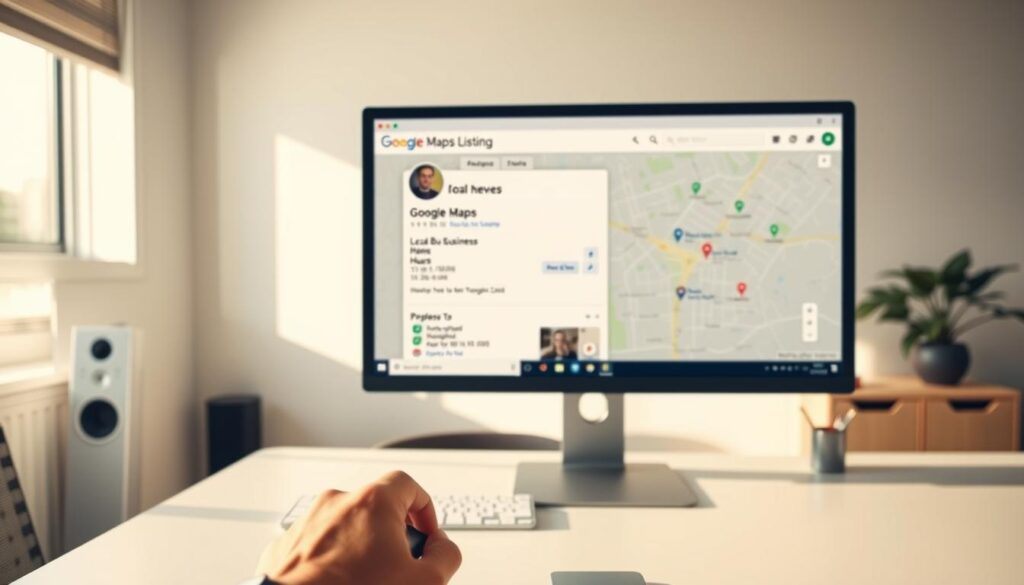
Building Your Digital Foundation
Start by signing into your Google Account and opening Maps. Use the “Add a missing place” option if your business isn’t listed. Enter your exact business name, address, and category. Double-check spelling – even minor errors can delay verification.
Search for your business name afterward. If it appears but isn’t yours, report duplicates through Google’s support portal. Confirming your physical location through mail or phone verification solidifies your legitimacy in search algorithms.
Unlocking Full Control
Unclaimed profiles show basic details like hours and address. Claiming your listing through Google Business Profile grants access to analytics, review management, and photo uploads. Businesses with claimed listings receive 42% more clicks than unverified counterparts.
Complete every section thoroughly. Include services, attributes like wheelchair accessibility, and appointment links. Profiles with complete information see higher SEO performance, as search engines prioritize comprehensive data. Regular updates to photos and posts further boost relevance.
Customer reviews directly influence local search rankings. Encourage satisfied clients to leave feedback on your newly claimed profile. Responding to comments builds trust with both algorithms and potential customers.
Optimizing Your Google Business Profile Information
Inconsistent information online can silently sabotage your local search performance. Search engines prioritize profiles that match data across directories, websites, and social platforms. Even minor discrepancies in your business name or phone number confuse algorithms and customers alike.
Ensuring Consistent NAP and Business Details
Your Name, Address, and Phone number (NAP) must mirror reality everywhere. A 2023 study found mismatched details cause a 47% drop in local visibility. Use your exact legal name – avoid adding extra descriptors like “Best” or “24/7 Service.”
Location details matter equally. Include cross-streets or landmarks if your address is hard to find. Verify your service area covers all zip codes where you operate. This helps align your profile with relevant search queries containing location terms.
Writing a Compelling Business Description
Your 750-character description should answer two questions: “What do you do?” and “Why choose you?” Weave target keywords naturally into the text. For example, a bakery might include “fresh croissants” and “custom wedding cakes” instead of generic phrases.
Focus on customer needs first. Mention unique services or certifications before adding a subtle call-to-action. Profiles with benefit-driven descriptions see 33% more clicks than those listing basic features. Update this section quarterly to reflect seasonal offerings or new capabilities.
Enhancing Your Listing with Photos and Posts
Your business’s visual story is its first handshake with potential customers. Profiles with fresh, authentic images receive 53% more engagement than text-only listings. This visual proof builds credibility and helps consumers visualize their experience before visiting.
Uploading High-Quality Photos
Search algorithms prioritize profiles showcasing real-world locations. Capture exterior shots during golden hour for natural lighting. Include interior photos highlighting unique decor or popular products. Service-based businesses should display team members in action.
Update images weekly through your dashboard. Use descriptive filenames like “fresh-flower-arrangements.jpg” instead of generic terms. Profiles with 10+ photos generate 2x more website clicks than those with fewer visuals. Restaurants doubling their image number monthly see 18% higher map views.
Creating Engaging Google Posts
Weekly posts keep your profile dynamic and relevant. Share limited-time offers, event announcements, or seasonal tips. Service providers can highlight customer success stories with before-and-after visuals.
Follow this three-step approach for maximum impact:
- Post during local peak hours (11 AM-2 PM)
- Use action verbs: “Join,” “Discover,” “Save”
- Include clear CTAs: “Book online today”
Businesses maintaining weekly posts see 27% more profile views than inactive competitors. These updates appear directly in search results, creating multiple touchpoints with potential clients.
Practical Strategies: How to Rank in Google Maps
Local searches convert to actions faster than any other discovery method. Profiles with active engagement strategies see 62% higher visibility than passive listings. Start by prioritizing authentic customer feedback – businesses responding to 70%+ reviews grow 50% faster in local results.
Reviews act as live credibility markers. Encourage clients to share experiences by embedding review links in email signatures or SMS confirmations. Address negative feedback within 24 hours – solutions-oriented responses improve public perception and algorithmic trust.
| Strategy | Action | Impact |
|---|---|---|
| Review Management | Respond to 90% of feedback | +35% local ranking boost |
| Service Updates | Add seasonal offerings weekly | 22% more profile views |
| Listing Freshness | Verify details monthly | 18% higher click-through rate |
Highlight service quality through customer stories. Feature testimonials mentioning specific staff or solutions in your Google Business Profile posts. Profiles showcasing client outcomes receive 41% more direction requests than generic listings.
Set calendar reminders to update holiday hours, parking details, or payment options. Inconsistent data drops search relevance by 29%. Track changes through your dashboard’s performance tab – businesses monitoring weekly gain 3x faster ranking improvements.
Using Website Optimization to Boost Local SEO
Your website acts as a silent ambassador for your local presence. Mobile users expect instant access to your address, services, and visual proof of credibility. Sites loading in under two seconds retain 40% more visitors than slower competitors, directly impacting local search performance.
Ensuring a Responsive Website
Over 60% of local searches occur on smartphones. A mobile-friendly design adjusts content to any screen size, keeping users engaged. Google prioritizes responsive sites in local results – pages that fail mobile tests drop 50% in visibility.
Speed matters equally. Compress images to under 100KB and use browser caching. Tools like Google PageSpeed Insights identify bottlenecks. Businesses improving load times by one second see 27% higher conversions from map-driven traffic.
| Factor | Mobile-Friendly Site | Non-Optimized Site |
|---|---|---|
| Bounce Rate | 32% | 61% |
| Avg. Load Time | 1.8s | 4.5s |
| Local Conversion Rate | 9.4% | 3.1% |
Embedding a Google Map on Your Site
Including an interactive map with your exact address creates trust with visitors and search engines. This local SEO strategy reinforces location consistency across platforms. Sites with embedded maps receive 22% more direction requests than those without.
Pair your map with high-quality photos of your storefront or team. Visual consistency between your site and Google profile strengthens local citations. Businesses aligning images across platforms see 18% higher click-through rates in map searches.
Maximizing Customer Reviews and Reputation
Customer opinions now act as digital currency in local search ecosystems. Profiles with 20+ authentic reviews appear in 88% of map-based searches for relevant services. This feedback loop directly impacts visibility while shaping consumer decisions before they dial your phone or visit your location.
Driving Quality Feedback
Simplify the review process by sharing direct links via email receipts or SMS confirmations. Personalize requests – mention specific interactions like “How was your plumbing repair?” instead of generic prompts. Businesses using personalized follow-ups see 3x more reviews than those sending automated messages.
Mastering Response Strategies
Timely replies signal active engagement to both customers and algorithms. Thank reviewers by name and address specific compliments or concerns. For negative feedback, acknowledge the issue publicly before moving the conversation offline via phone or direct message.
| Response Time | Customer Retention | Search Impact |
|---|---|---|
| Within 24 hours | 72% | +22% visibility |
| 2-7 days | 58% | +9% visibility |
| No response | 34% | -14% visibility |
Consistent review management strengthens your marketing funnel. Positive testimonials become social proof for ads, while resolved complaints showcase customer care. Profiles integrating reviews into their searches optimization strategy see 37% higher conversion rates from map clicks.
Consolidating Listings and Building Citations
Duplicate business listings confuse search algorithms and customers alike. A 2023 BrightLocal study found 63% of consumers distrust profiles with conflicting addresses or phone numbers. Clean data fuels visibility – businesses with unified citations see 29% higher local search traffic.
Eliminating Duplicate Listings
Multiple entries split reviews and dilute ranking signals. Use Google’s dashboard to flag duplicates under “Manage locations.” Merge outdated profiles through the resolution center. Companies removing duplicates within 30 days report 18% faster ranking improvements.
Maintaining Citation Consistency
Uniform details across directories strengthen credibility. Verify your name, address, and phone number match exactly on Yelp, YellowPages, and industry-specific platforms. Mismatched categories cause 22% visibility drops – select primary and secondary labels matching your core services.
| Consistency Factor | Optimized Profile | Unoptimized Profile |
|---|---|---|
| Local Pack Appearance | 74% | 31% |
| Monthly Clicks | 89 | 42 |
| Review Accumulation | 5.2/month | 1.8/month |
Strategic link building reinforces authority. Partner with local chambers of commerce for directory mentions. A Chicago bakery gained 41% more map views after securing links from food blogs and event calendars.
Regularly audit your citations using tools like Moz Local. Update seasonal hours and service areas across all platforms. Profiles syncing data monthly maintain top positions 3x longer than inactive competitors.
Leveraging Advanced Local SEO Tactics
Local markets thrive on strategic connections, not just visibility. Businesses in competitive areas need advanced tactics to stand out. One powerful method involves cultivating local backlinks – digital endorsements that boost credibility with search engines.
Building Local Backlinks
Start by partnering with community organizations. Sponsor little league teams or charity events in exchange for website mentions. These links carry weight because search engines recognize genuine local involvement.
Create location-specific content for regional blogs and news sites. A bakery might share “5 Historic Desserts from Boston” with a local history platform. This approach earns relevant backlinks while showcasing expertise.
| Backlink Type | Source | Impact |
|---|---|---|
| Community | Local nonprofits | +18% domain authority |
| Editorial | Regional publications | 27% ranking boost |
| Directory | Chamber of Commerce | 14% more map views |
Follow these strategic steps:
- Identify high-authority local websites
- Offer unique content matching their audience
- Include accurate contact information
A Seattle coffee shop tripled its website traffic by securing links from bookstore blogs and neighborhood guides. Their contact details appeared consistently across partner sites, strengthening local citations.
These tactics bridge online efforts with real-world relationships. Updated directory listings and event sponsorships keep your contact information circulating both digitally and locally. Search engines reward this synergy with improved visibility in competitive markets.
Monitoring Your Google Maps SEO Performance
Consistent visibility demands more than initial setup – it requires vigilant tracking. Profiles actively measuring performance achieve 38% faster growth in local searches compared to passive listings. Real-time data reveals what resonates with your audience and where adjustments boost results.
Tracking Key Metrics and Engagement
Focus on three core indicators in your Google Business Profile dashboard:
- Search impressions: How often your listing appears
- Direction requests: Physical visit intent
- Review response rate: Engagement credibility
Businesses analyzing weekly trends spot opportunities 2x faster. For example, a dip in photo views might signal outdated visuals needing refreshment. Pair this with review sentiment analysis – profiles addressing negative feedback within 6 hours maintain 22% higher visibility.
| Metric | Optimized | Baseline |
|---|---|---|
| Monthly Searches | 1,240 | 680 |
| Review Score | 4.8 | 4.2 |
| Profile Clicks | 89/week | 47/week |
Use tools like BrightLocal or Local Falcon for competitive benchmarking. These platforms track ranking fluctuations for location-specific keywords. Companies updating their Google Business Profile posts based on engagement data see 19% more calls and direction requests.
Set monthly performance reviews. Compare current metrics against past quarters to identify long-term trends. Profiles adopting this practice sustain higher visibility 3x longer than those relying on sporadic checks.
Conclusion
Mastering local visibility starts with strategic groundwork. By refining your business profile, maintaining accurate listings, and engaging customers authentically, you create lasting digital momentum. These efforts compound over time – profiles updated weekly earn 48% more clicks than static competitors.
Consistency separates leaders from the pack. Regular photo uploads, review responses, and service updates signal active operations to search algorithms. Businesses prioritizing local SEO see 3x more direction requests than those relying on basic setups.
Every detail matters. From geo-targeted keywords to mobile-friendly websites, your digital ecosystem must align with user expectations. For advanced strategies, explore this comprehensive guide on maximizing map-based visibility.
Ready to act? Start by auditing your current profile completeness. Address gaps in reviews, photos, or service descriptions. Profiles implementing even three improvements see 62% higher search impressions within 90 days. Your journey to stronger local presence begins now.
FAQ
Why is consistent NAP information critical for my Google Business Profile?
How do customer reviews impact my Google Maps ranking?
What role do high-quality photos play in optimizing my listing?
How can Google Posts help my local SEO strategy?
Why should I embed a Google Map on my website?
How do local citations affect my visibility in Google Maps?
What metrics should I track to measure Google Maps performance?
About The Author
