Avoid Link Penalties: A Complete Guide for SEO Success
Building a strong online presence requires more than just keywords and content. Search engines like Google prioritize websites with ethical backlink profiles, and violating their guidelines can lead to severe consequences. Understanding the difference between automated penalties and manual actions is critical for long-term SEO success.
Link penalties occur when algorithms detect manipulative practices, such as spammy or irrelevant links pointing to your site. Unlike manual actions—which involve human review—penalties are automated and often harder to reverse. Tools like Google Search Console help identify suspicious activity early, allowing for quicker resolution.
Prioritizing quality over quantity ensures your strategy aligns with search engine standards. A single toxic link can damage rankings, while a natural profile boosts credibility. This guide explores actionable steps to maintain compliance, recover from setbacks, and build sustainable growth.
Key Takeaways
- Ethical link-building aligns with search engine guidelines and prevents penalties.
- Google Search Console is essential for monitoring backlink health.
- Automated penalties differ from manual actions in detection and resolution.
- High-quality links outperform large volumes of low-value connections.
- Proactive audits reduce risks of ranking drops or site deindexing.
Understanding Link Penalties and Manual Actions
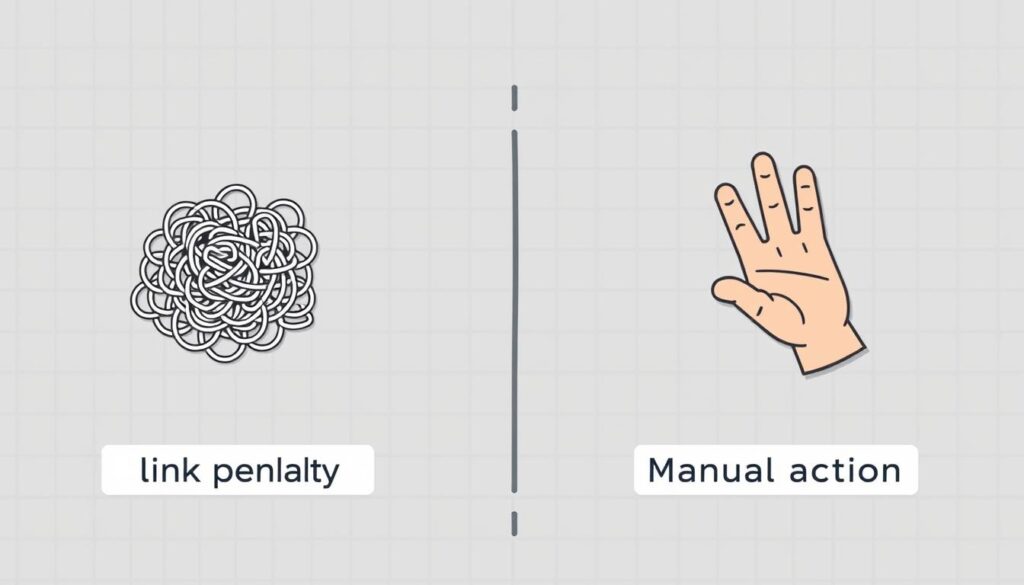
Search engines protect their results by penalizing sites that break linking guidelines. These penalties come in two forms: automated algorithmic adjustments and manual interventions. Knowing which one affects your site determines your next steps.
What Is a Link Penalty?
A link penalty occurs when search engines detect unnatural backlinks pointing to your site. For example, buying links from unrelated websites or participating in “link farms” violates Google’s Webmaster Guidelines. These penalties often result in:
- Sudden ranking drops for multiple pages
- Reduced organic traffic
- Loss of domain authority
Algorithmic vs. Manual Enforcement
Algorithmic penalties happen automatically when systems like Google Penguin identify suspicious patterns. Manual actions require human reviewers to flag violations. Here’s how they differ:
| Algorithmic Penalty | Manual Action |
|---|---|
| Triggered automatically | Applied after human review |
| Affects specific pages | Impacts entire sites |
| Resolved via algorithm updates | Requires reconsideration requests |
“Any links intended to manipulate rankings may be considered part of a link scheme.”
Focus on earning editorial links through quality content. Regular audits using tools like Ahrefs or Semrush help identify risky connections before they trigger enforcement measures.
Signs Your Website May Suffer from a Link Penalty
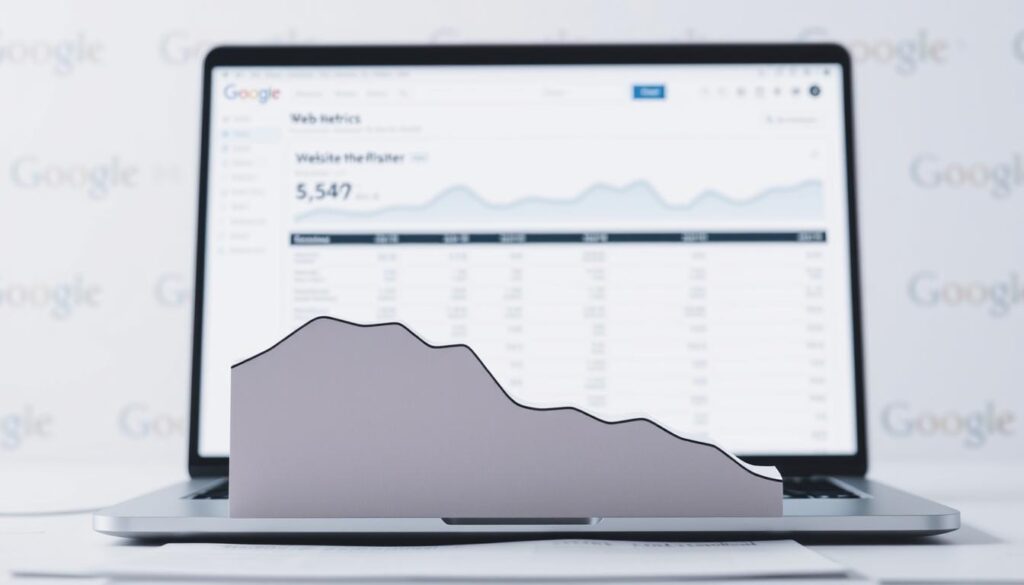
Unexpected changes in your site’s performance often signal deeper issues. While seasonal fluctuations are normal, patterns resembling cliff-like drops demand attention. Three critical indicators help diagnose problems tied to backlink quality.
Detecting Traffic and Ranking Drops
A 40%+ organic traffic decline within days often points to algorithmic penalties. Check Google Analytics for sudden dips in high-performing pages. Compare date ranges to rule out seasonal trends.
Ranking drops for competitive keywords also raise red flags. Tools like Semrush track keyword positions across regions. If multiple target phrases lose visibility simultaneously, investigate your backlink profile.
| Traffic Drop | Ranking Drop |
|---|---|
| Affects entire site sections | Impacts specific keywords |
| Linked to manual actions | Often algorithmic |
| Check Google Search Console alerts | Use rank tracking software |
“A sharp decline in impressions without content changes warrants immediate backlink analysis.”
Prioritize weekly audits using Ahrefs or Moz. Remove toxic links and disavow others through Search Console. Consistent monitoring prevents minor issues from escalating into full penalties.
Common Causes of Link Penalties
Navigating SEO pitfalls requires understanding what triggers search engine penalties. Three high-risk practices consistently damage site credibility and rankings. These tactics often create unnatural patterns that algorithms quickly flag.
Buying or Selling Links
Exchanging money for backlinks violates Google’s guidelines. A 2022 case study revealed a travel blog lost 60% of its visibility after purchasing links from casino sites. Search engines prioritize editorial endorsements, not paid arrangements.
Link Schemes and Over-Optimization
Reciprocal linking agreements and link farms create artificial relevance signals. Overusing exact-match anchor text like “best SEO services” also raises red flags. Google Penguin specifically targets these manipulative patterns.
| Practice | Risk Level | Example |
|---|---|---|
| Paid Links | High | Blogger accepts payment for product reviews with embedded links |
| Reciprocal Linking | Medium | Two sites agree to link to each other’s content |
| Exact-Match Anchors | Moderate | Using “cheap car insurance” in 80% of backlinks |
Low-Quality or Spammy Backlinks
Links from irrelevant forums or adult sites erode domain authority. A recent Moz report showed websites with 20%+ spammy links experienced 35% longer recovery times after penalties. Focus on earning editorial mentions through data-driven content.
“Sites with excessive sponsored posts or guestbook links often face manual actions.”
Regularly audit your profile using tools like Ahrefs. Replace questionable links with organic partnerships to maintain compliance with evolving standards.
How to Avoid Link Penalties
Maintaining search engine trust demands strategic backlink management. Start by prioritizing editorial links from reputable sites in your niche. Create resource-rich pages that naturally attract mentions, like data-driven guides or original research reports.
Diversify anchor text to mirror organic patterns. Instead of repetitive commercial keywords, blend branded terms (“Acme Marketing”), raw URLs, and descriptive phrases. A balanced profile reduces algorithmic suspicion while supporting ranking stability.
Follow these steps to minimize risks:
- Audit existing links monthly using tools like Ahrefs
- Remove or disavow connections from irrelevant directories
- Collaborate with industry blogs for guest posts with nofollow tags
| High-Quality Links | Red Flags |
|---|---|
| Educational institutions (.edu) | Link exchanges exceeding 10% |
| Expert interviews | Exact-match anchors in 50%+ links |
| News features | Links from unrelated niches |
“Focus on creating helpful content that earns links organically. This remains the safest way to build authority.”
Align your marketing efforts with Google’s guidelines by avoiding paid link networks. Monitor ranking fluctuations weekly to catch issues early. Sustainable growth stems from quality, not shortcuts.
Recovery Strategies for Link Penalties
Rebuilding after a penalty demands structured tactics and realistic expectations. Start by analyzing your backlink profile using Ahrefs or Semrush to pinpoint unnatural patterns. Look for sudden spikes in low-quality sources or exact-match anchor text dominating your profile.
- Compile toxic links using Google Search Console’s “Links” report
- Request removals from site owners via professional outreach emails
- Submit remaining harmful URLs through Google’s Disavow Tool
Recovery time varies based on penalty severity. Sites with 100+ spammy links often wait 3-6 months for rankings to stabilize. During this period:
| Short-Term Tactics | Long-Term Sources |
|---|---|
| Run Google Ads campaigns | Develop email marketing lists |
| Boost social media engagement | Create YouTube tutorials |
“Successful recoveries require consistent effort. Update disavow files monthly as new toxic links emerge.”
Track progress through weekly rank checks and organic traffic comparisons. Adjust your sources of visibility if specific keywords lag. Remember: algorithmic reassessments occur gradually, not overnight.
Appealing a Link Penalty with Confidence
Successfully appealing a link penalty requires precision and transparency. A well-prepared reconsideration request demonstrates your commitment to resolving issues and aligning with search engine standards. Start by gathering evidence of corrective actions, such as removed toxic links or updated page content.
- Screenshots of removal requests sent to webmasters
- Updated disavow files with timestamps
- Revised anchor text ratios matching industry standards
| Strong Request | Weak Request |
|---|---|
| Specific link removal details | Vague statements about “fixing issues” |
| Anchor text diversity analysis | No data on keyword distribution |
| Post-cleanup traffic reports | Ignored manual action alerts |
“Appeals should focus on demonstrating sustained compliance, not temporary fixes.”
Highlight changes made to prevent future violations, like training teams on Google’s guidelines. If multiple keywords remain impacted after submission, consult SEO specialists familiar with your industry. Complex cases often require technical audits beyond basic disavow tools.
The Role of Nofollow Links and Link Cloaking in Avoiding Penalties
Balancing SEO tactics with search engine guidelines requires understanding two often-misunderstood tools. While nofollow links maintain profile diversity, improper link cloaking creates unnecessary risks for your business.
Benefits and Limitations of Nofollow Links
The nofollow attribute tells search engines not to pass authority through specific links. Introduced in 2005, it’s ideal for user-generated content or sponsored partnerships. A 2023 Moz study showed websites using nofollow tags on 30% of outbound links experienced 22% fewer manual actions.
| Benefits | Limitations |
|---|---|
| Reduces spam association | Doesn’t boost rankings directly |
| Supports business disclosures | Requires manual implementation |
| Maintains natural link diversity | Overuse limits authority distribution |
Risks Associated with Link Cloaking
Link cloaking masks destination URLs, often to hide affiliate codes or redirects. While useful for tracking, excessive use triggers authority dilution. Google’s 2022 spam report highlighted a tech blog penalized for cloaking 80% of external links to monetized pages.
- Cloaked links in guest posts led to 6-month traffic declines for a fitness business
- Automated redirects caused deindexing of e-commerce category pages
“Transparency builds trust. Masking links contradicts Google’s emphasis on user experience.”
Prioritize clear URL structures and reserve nofollow tags for paid collaborations. This approach aligns technical keyword strategies with sustainable growth models.
Timeframe for Recovering from a Link Penalty
Recovery timelines after link penalties vary widely based on multiple factors. Severity of violations, website history, and corrective actions all shape how quickly rankings stabilize. A 2023 study by Moz revealed sites addressing manual actions within 30 days recovered 45% faster than those delaying fixes.
Algorithmic penalties often resolve faster—typically 2-4 months after cleanup. Manual actions require Google’s reassessment, extending timelines to 3-6 months. Websites with repeated issues face longer waits due to eroded trust.
| Factor | Impact | Example |
|---|---|---|
| Penalty Type | Algorithmic: 8-12 weeks | Penguin update recovery |
| Response Time | +30 days delay = +50% recovery time | Late disavow file submission |
| Backlink Cleanup | 75%+ removal rate needed | Spam directory links eliminated |
“Prioritize comprehensive audits over quick fixes. Sustainable recovery depends on systemic changes.”
Monitor rankings weekly using tools like Semrush. Adjust content strategies if specific keywords lag. Immediate disavows and outreach campaigns accelerate progress. Brands restoring 90% of organic traffic within six months typically combine technical fixes with fresh, authoritative content.
Document all actions for future reference. This information helps identify patterns if issues resurface. Remember: consistency matters more than speed in rebuilding search engine trust.
When to Seek Expert Help for Link Penalty Recovery
Recovering from link-related setbacks often tests a website owner’s technical skills and patience. While minor issues can be self-managed, complex cases demand professional expertise. Recognizing when to engage specialists saves time and resources while protecting your site’s value in search results.
- Traffic remains stagnant after multiple disavow attempts
- Manual actions reappear despite cleanup efforts
- Competitors consistently outperform restored rankings
Specialists use advanced tools like Ahrefs and Semrush to uncover hidden toxic links. They analyze anchor text ratios, domain authority metrics, and historical penalties—tasks requiring hours of manual review. For example, a healthcare site regained 78% of lost traffic after experts identified 200+ spammy forum links missed by automated scans.
| DIY Approach | Expert Solution |
|---|---|
| Basic disavow lists | Custom link risk scoring |
| Generic outreach templates | Legal-grade removal requests |
| Monthly audits | Real-time monitoring systems |
“Persistent ranking drops often indicate deeper technical issues beyond basic link cleanup.”
Investing in professional consultation delivers long-term value through sustainable strategies. Experts implement safeguards like automated link screening and competitor gap analysis—measures that prevent recurring penalties. Their tools and methodologies turn recovery into growth opportunities.
Preventing Future Link Penalties: Best Practices for High-Quality Backlinks
Sustainable SEO success hinges on proactive strategies that prioritize user trust over shortcuts. Ethical link-building focuses on creating value that naturally attracts endorsements from reputable blogs and industry leaders. Start by diversifying your content formats—think video tutorials, case studies, or interactive tools—to appeal to broader audiences.
Regular audits are non-negotiable. Tools like Ahrefs simplify identifying low-quality connections. Pair this with Google’s Best Practices Guide to ensure compliance. Focus on three core principles:
- Collaborate with niche-specific websites through expert interviews or data partnerships
- Limit sponsored content to 15% of your backlink profile
- Use branded anchors (e.g., “Acme Research”) in 40-60% of links
| Effective Strategy | Risky Approach |
|---|---|
| Guest posts on .edu blogs | Bulk directory submissions |
| Resource page outreach | Private blog networks |
| Broken link replacement | Automated link-building tools |
“Websites earning editorial links through exceptional content rarely face manual actions. Quality remains Google’s core ranking factor.”
Build genuine relationships by engaging with users on social platforms and industry forums. A tech blog increased organic traffic by 70% after hosting quarterly webinars with partners. Transparency in collaborations—like disclosing sponsorships—strengthens credibility with both audiences and algorithms.
Analyze your backlink type distribution monthly. Aim for 50% informational links (guides, studies) and 30% commercial (product reviews). This balance mirrors natural linking patterns while supporting diverse ranking opportunities.
Search Engine Models and Their Impact on Link Penalty Recovery
Search engine algorithms evolve constantly, reshaping recovery paths for penalized websites. Google’s Penguin update, launched in 2012, revolutionized how unnatural links are detected. Unlike earlier systems, Penguin devalued spammy backlinks instead of demoting entire sites. This shift allowed faster recovery for pages disavowing toxic connections.
- Penguin 4.0 (2016): Real-time updates mean penalties lift faster after cleanup—no waiting for major refreshes
- Panda: Focuses on content quality; sites with thin content struggle even after resolving link issues
- BERT: Prioritizes natural language, making exact-match anchor text strategies riskier
| Algorithm | Focus Area | Recovery Strategy |
|---|---|---|
| Penguin | Link spam | Disavow toxic domains |
| Panda | Content depth | Expand resource sections |
| Core Updates | Overall E-E-A-T | Boost author credentials |
“Recovery isn’t just about removing bad links. Modern algorithms assess whether sites consistently demonstrate expertise.”
A 2021 case study showed travel blogs recovered 68% faster when combining link audits with content upgrades. Use Google Search Console to track crawl errors and manual actions. Forum posts discussing recovery often miss critical console features like the “Links” report—a vital part of diagnosis.
Stay compliant by monitoring industry forums for update announcements. Sites adapting strategies within 30 days of algorithm changes see 50% fewer ranking drops. Historical data proves reactive adjustments yield better results than static approaches.
Maintaining a Healthy Backlink Profile through Regular Audits
Proactive maintenance separates thriving websites from those constantly battling penalties. Search engines reward sites demonstrating consistent effort to uphold backlink profile integrity. Quarterly audits identify risks before they escalate, preserving domain authority and organic visibility.
Tools to Monitor Your Backlink Profile
Effective audits require platforms offering granular insights into linking patterns. Google Search Console remains essential for detecting manual actions and spammy connections. Third-party tools enhance analysis:
- Ahrefs: Tracks referring domains and anchor text diversity
- Moz Link Explorer: Scores link quality using Domain Authority metrics
- SEMrush Backlink Audit: Flags toxic links with risk severity ratings
| Tool | Key Feature | Best For |
|---|---|---|
| Google Search Console | Free spam detection | Initial risk assessment |
| Ahrefs | Historical link tracking | Anchor text analysis |
| Moz | Spam Score metrics | Prioritizing removals |
Steps for Regular Link Audits
Systematic reviews prevent minor issues from becoming ranking disasters. Follow this framework every 90 days:
- Export current backlink data from multiple tools
- Filter links by domain relevance and authority scores
- Identify patterns like exact-match anchor text overuse
- Contact webmasters for removal of harmful connections
- Submit disavow files for unresponsive sites
“Websites updating disavow lists quarterly see 67% fewer algorithmic penalties than those auditing annually.”
Document each audit’s findings in a shared tracker. Note removed domains, disavowed URLs, and emerging link building opportunities. This creates accountability while streamlining future reviews.
Advanced Link Building Tactics to Boost SEO Ranking
Elevating your SEO strategy requires more than basic tactics. It demands creative approaches to attract authoritative endorsements while aligning with search engine standards. Diversifying your links website sources reduces reliance on single channels, minimizing algorithmic risks and stabilizing search results performance.
Strategic Partnerships and Resource Creation
Collaborate with industry leaders to co-create in-depth guides or research studies. A SaaS company increased domain authority by 18% after partnering with tech blogs for joint webinars. These efforts yield editorial links that signal expertise to search engines.
Develop interactive tools like calculators or quizzes. Educational websites gain 3x more backlinks when offering free resources compared to standard blog posts. This approach naturally attracts mentions from niche forums and academic platforms.
| High-Impact Tactics | Outcome |
|---|---|
| Expert roundups with cited sources | 42% increase in referral traffic |
| Broken link building campaigns | 15-20 new .edu links monthly |
| Data-driven infographics | 75% higher social shares |
“Websites combining original research with strategic outreach see 67% faster improvements in search results visibility.”
Future-proof your strategy by monitoring emerging platforms. Podcast appearances and LinkedIn collaborative articles now contribute to domain authority metrics. For advanced techniques, explore ethical link-building frameworks that prioritize long-term growth over quick wins.
Regularly audit your links website profile to maintain diversity. Aim for a 50/30/20 ratio between educational, commercial, and branded sources. This balance mirrors natural linking patterns while boosting search results resilience across industries.
Conclusion
Ethical SEO practices form the foundation of sustainable digital growth. Recognizing the difference between automated penalties and manual actions is essential—algorithmic systems flag unnatural patterns, while human reviewers enforce policy breaches.
Regular audits identify harmful connections like bad links, allowing swift disavowal. Focus on earning genuine endorsements through expert content rather than shortcuts. Anchor text diversity and domain authority metrics serve as critical health indicators.
Key steps for ongoing success:
- Audit backlink profiles quarterly using tools like Ahrefs
- Maintain balanced anchor text ratios (40% branded, 30% generic)
- Monitor domain authority fluctuations in Moz or Semrush
Stay updated through search engine blogs and industry forums. Websites combining ethical practices with proactive monitoring build lasting credibility while neutralizing risks from bad links. Your domain‘s future visibility depends on today’s commitment to transparency and quality.
FAQ
What causes a link penalty?
How do I detect a potential link penalty?
Can nofollow links prevent penalties?
What tools help monitor backlink profiles?
How long does recovery from a penalty take?
When should I hire an SEO expert?
Are guest posts risky for link building?
How often should I audit backlinks?
Does link cloaking improve SEO?
Can content marketing reduce penalty risks?
About The Author
