How to Get Voice Search Featured: A Step-by-Step Guide
Voice-enabled technology is reshaping how customers interact with brands. Over 50% of U.S. households now use smart speakers, and mobile voice queries continue to rise. For businesses, adapting to this shift isn’t optional—it’s essential for staying competitive.
This guide simplifies the process of aligning your SEO strategy with voice-driven trends. You’ll learn practical methods to improve content relevance, structure answers for natural language queries, and secure prime placement in search results. Traditional text-based tactics still matter, but voice optimization requires a fresh approach.
Why prioritize this? Voice searches often target local businesses and immediate needs. Users expect concise, conversational responses. Brands that deliver these experiences see higher engagement and conversions. Consider a bakery using location-based phrases like “near me” in content—this simple tweak can boost visibility for voice-driven local searches.
Key Takeaways
- Voice search adoption is accelerating, with smart devices influencing consumer habits
- Optimized content must answer questions conversationally and concisely
- Mobile-first indexing impacts voice search rankings significantly
- Local SEO and structured data enhance visibility for location-based queries
- Successful strategies blend traditional SEO with voice-specific adjustments
- Real-world case studies demonstrate measurable improvements in traffic
Introduction to Voice Search and Its Impact
Modern technology shifts are evident as verbal queries become a primary search method. Over 135 million Americans now use voice assistants monthly, driven by mobile adoption and smart speaker ownership. This behavioral change demands strategic adjustments for businesses aiming to stay visible.

Understanding the Rise of Voice Search
Advanced devices like Amazon Echo and Google Home simplified information access. Users prefer asking questions aloud rather than typing. 55% of households with smart speakers use them daily for weather updates, recipes, and local business details.
Traditional text-based search optimization focuses on short phrases. Voice queries mirror natural speech. Instead of “best pizza NYC,” people ask, “Where can I find authentic Neapolitan pizza nearby?” This shift requires content structured around full-sentence questions.
Current Trends in the United States
Mobile drives 60% of voice searches, with 27% occurring while driving. Young adults (18-34) lead adoption, but 45% of seniors now use voice tools for hands-free convenience. Research confirms location-based phrases like “open now” or “closest” dominate mobile queries.
Local businesses ranking in voice search results see 30% more foot traffic. Search engines prioritize concise answers from optimized pages. Brands using structured data markup appear in featured snippets—the prime position for voice responses.
Understanding Voice Search SEO
Digital interactions increasingly rely on spoken commands. Speech recognition systems convert spoken words into text, which search engines process to deliver answers. This technology powers smart speakers, phones, and other tools people use daily.
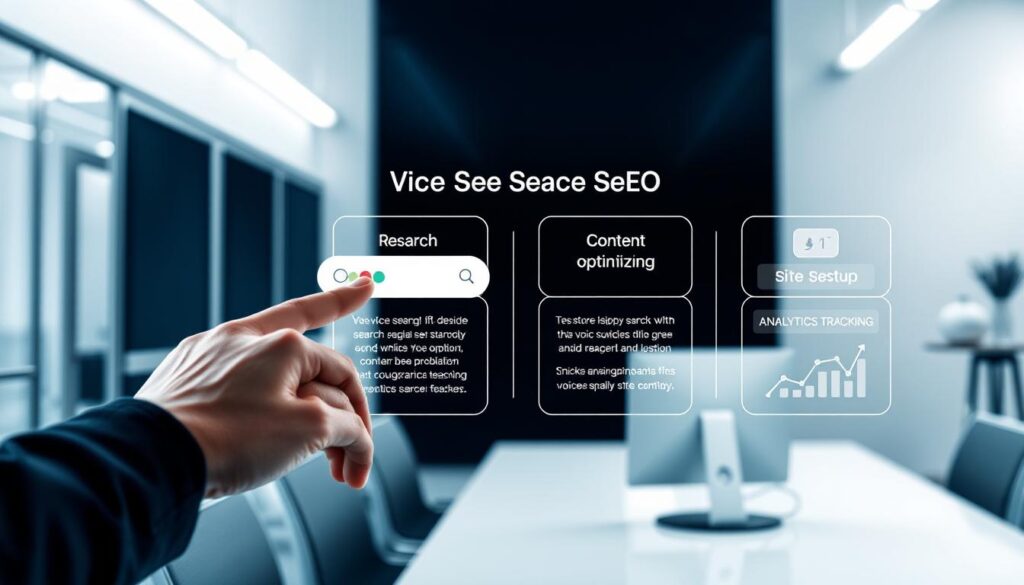
What Is Voice Search?
Voice search lets users ask questions aloud instead of typing. Platforms like Google Assistant analyze these queries using natural language processing. Responses come from websites optimized for conversational phrases.
Traditional SEO targets short keywords. Voice optimization focuses on full questions like “What’s the closest hardware store open right now?” These long-tail keywords match how people speak. Content structured this way ranks higher in verbal results.
Benefits for Local Businesses and Accessibility
Accurate business profile details on Google Business listings help nearby customers find you. Voice searches often include phrases like “near me” or “open today.” Optimizing for these terms improves visibility in local SEO results.
Mobile devices drive 60% of voice searches. Fast-loading pages with clear answers work best. For example, a coffee shop updating its hours on its business profile gains more foot traffic from morning commuters asking for “espresso nearby.”
Structured data helps search engines understand your content. This leads to direct answers in voice results instead of generic links. Users get instant information, while businesses build trust and accessibility.
how to get voice search featured: Essential Optimization Strategies
Businesses aiming for visibility in voice-driven results need targeted tactics. Three core methods improve rankings: capturing featured snippets, refining local profiles, and implementing structured data. These approaches align with how devices retrieve answers for users.
Optimizing for Featured Snippets
Featured snippets dominate voice results. To secure these positions:
- Structure content around direct questions (“What’s the best way to…”)
- Use bullet points or numbered lists for clarity
- Keep explanations under 40 words
Tools like AnswerThePublic identify common queries. Addressing these increases snippet selection chances. For example, a hardware store might target “how to unclog a drain” with step-by-step instructions.
Updating Your Google Business Profile
Accurate profiles fuel local voice results. Verify your:
- Business hours
- Contact information
- Service categories
Include location-specific keywords like “emergency plumbing services in [city].” Regular updates ensure search engines pull correct data for “near me” queries.
Leveraging Schema Markup for Rich Results
Schema markup helps devices understand page context. Add code for:
- Business addresses
- Product prices
- Event dates
This structured data boosts rich result eligibility. A bakery using recipe schema might appear when users ask, “How do I make sourdough bread?” For deeper insights, optimize your website for voice queries using technical best practices.
Enhancing Content and User Accessibility
User-friendly websites thrive when content mirrors everyday language and loads instantly. Aligning with verbal query patterns and technical performance standards creates seamless experiences that devices—and people—prefer.
Incorporating Natural Language and Conversational Keywords
People ask full-sentence questions when speaking to devices. Instead of typing “weather Boston,” they say, “Will it rain in Back Bay this afternoon?” Content should answer these phrases directly.
Tools like AnswerThePublic reveal common verbal queries. Integrate phrases like “Where can I find…” or “What causes…” naturally into headings. For example, a plumber’s site might include “Why is my faucet leaking?” as a subheader followed by a brief solution.
Ensuring Mobile Friendliness and Fast Page Load Speeds
Over 60% of verbal searches happen on phones. Google prioritizes pages that load under three seconds. Slow sites lose users—53% abandon pages taking longer.
Optimize images by compressing file sizes. Remove unnecessary plugins clogging speed. Test performance with Lighthouse or PageSpeed Insights. A bakery improving load time by two seconds saw a 34% drop in bounce rates from mobile consumers.
Structured navigation matters. Clear menus help visitors—and search crawlers—find answers quickly. Pair these technical fixes with mastering voice search optimization for full-spectrum results.
Implementing Advanced Techniques for Voice Search Success
Optimizing for spoken queries demands continuous refinement. Advanced strategies blend audits, performance tracking, and structured data adjustments to maintain competitive edge.
Conducting a Comprehensive Voice Search Audit
Start by evaluating existing content gaps. Analyze which queries your site answers effectively and where competitors outperform you. Focus on long-tail phrases people use conversationally.
Check technical elements like page speed and mobile responsiveness. Slow-loading pages frustrate users and hurt rankings. Structured data markup errors often surface here—validate schema implementation using Google’s testing tools.
Customer reviews reveal unexpected opportunities. Phrases like “helpful staff” or “quick service” in feedback mirror natural language queries. Integrate these terms into FAQs or service pages.
Monitoring Performance and Adjusting Strategy
Track keyword positions across engines weekly. Tools like SEMrush highlight drops in visibility for critical terms. Adjust content based on these insights—expand underperforming topics or clarify ambiguous answers.
Test content across devices like smart speakers and smartphones. Ensure responses remain consistent and accurate. A restaurant might discover Alexa reads menu prices differently than Google Assistant, requiring formatting tweaks.
Advanced analytics reveal which results drive conversions. Prioritize optimizing high-impact pages. Regular markup updates keep business information current in voice-generated answers, solidifying trust with users.
Conclusion
Mastering voice search optimization requires blending technical precision with conversational content. Key strategies include refining Google Business Profile details, structuring answers for natural queries, and prioritizing mobile-first designs. These steps ensure businesses appear in local results when users ask devices for immediate solutions.
Accurate profile management remains critical. Updated hours, services, and location data help search engines match queries like “open now” or “closest options.” Combined with schema markup, this boosts visibility in voice-generated answers.
The future of search leans heavily on voice technology. With smart speaker adoption growing, businesses adopting these tactics now will dominate rankings. Early adaptors gain trust as voice assistants prioritize reliable, fast-loading sources.
Success hinges on balancing advanced techniques—like structured data audits—with clear, concise content. For actionable steps, explore this comprehensive voice search optimization guide. Stay agile, monitor emerging trends, and refine strategies to maintain competitive edge.
FAQ
Why is optimizing for featured snippets critical for voice search?
How does updating a Google Business Profile improve voice search visibility?
What role does schema markup play in voice search optimization?
Why are conversational keywords important for voice search?
How does mobile optimization impact voice search performance?
What’s included in a voice search audit?
Can customer reviews influence voice search rankings?
How often should voice search strategies be adjusted?
About The Author
