How to Measure Voice Search Traffic: A Step-by-Step Guide
Voice-enabled devices have reshaped how people interact with search engines. Over 50% of U.S. households now use smart speakers, driving brands to adapt their optimization strategies. This shift demands a fresh approach to content creation and technical SEO.
Companies like Starbucks and Domino’s already leverage natural language patterns to align with voice queries. Their success highlights the importance of conversational keywords and fast-loading pages. Structured data markup ensures search engines better understand website content, boosting visibility in spoken results.
Recent studies emphasize that voice-driven searches often prioritize local businesses. Optimizing for “near me” phrases and user intent can elevate rankings. Tools like Google Search Console now offer insights into voice-based performance metrics, helping refine strategies.
Key Takeaways
- Voice interactions require conversational content tailored to natural language patterns.
- Structured data and page speed critically influence visibility in voice results.
- Local SEO optimization aligns with the “near me” nature of many voice queries.
- Analytics tools provide actionable data to track voice-driven performance.
- Brands adopting voice-friendly strategies gain a competitive edge in search rankings.
Introduction to Voice Search Traffic Measurement
Digital interactions now prioritize spoken commands over typed phrases. Over 65% of U.S. consumers use voice assistants weekly, according to 2025 industry reports. This behavioral shift makes analyzing conversational queries essential for businesses aiming to stay competitive.
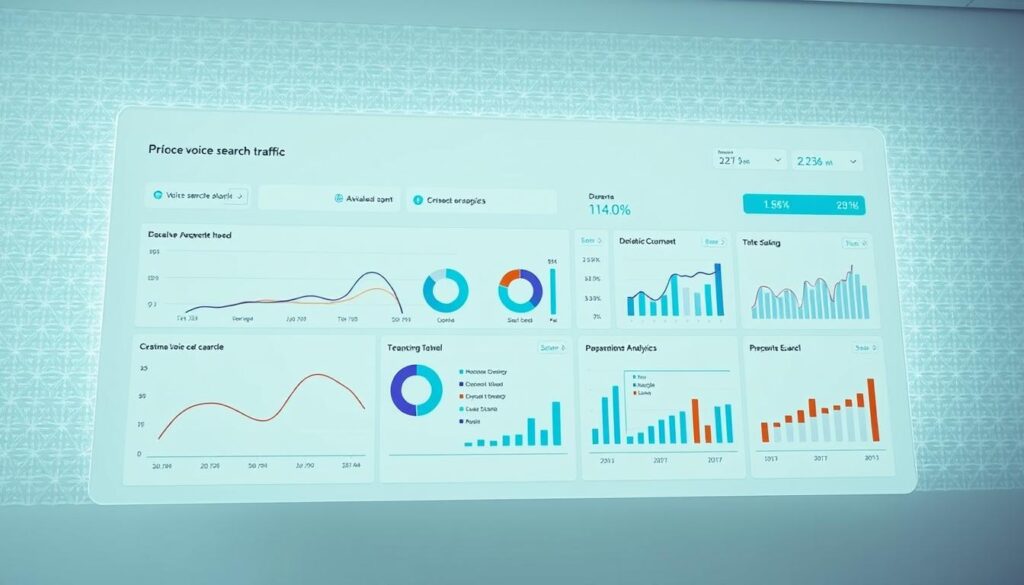
Traditional SEO focuses on short keywords, but voice-driven searches rely on full sentences. Phrases like “Where’s the nearest coffee shop open now?” dominate these interactions. Content optimized for natural language patterns performs better in voice results.
Tracking this traffic reveals user intent and local preferences. For example, mobile voice searches often include location-based terms. Brands that decode these patterns refine their strategies to match real-time needs.
Tools like Google Search Console now categorize voice-specific data separately. This helps businesses identify trends in spoken queries and adjust content accordingly. Structured data markup further enhances visibility for search engines processing voice requests.
Ignoring this growing channel risks losing visibility to competitors. Prioritizing voice-friendly SEO ensures alignment with how people discover products and services today.
Understanding Voice Search and Its Impact on SEO
Voice technology has transformed everyday interactions into spoken dialogues with devices. Over 40% of U.S. adults use voice assistants weekly, driven by advancements in AI and smart home integration. This evolution demands SEO strategies that mirror human conversation rather than robotic keyword matching.

The Rise of Voice Assistants
Smart speakers and mobile assistants now answer 75% of basic informational queries. Apple’s Siri handles 25 billion monthly requests, while Amazon’s Alexa powers 300,000+ smart home devices. Brands like Whirlpool integrate voice commands into appliances, creating new touchpoints for customer engagement.
These tools prioritize context over brevity. When users ask, “What’s the best gluten-free pizza near me?” they expect localized, conversational answers. Voice search SEO strategies must address this shift by blending long-tail phrases with precise location data.
User Behavior Insights
Spoken queries are 30% longer than typed ones, often framed as complete questions. Google’s 2023 study found 70% of voice searches use natural language like “Why does…” or “How can I…”. Domino’s Pizza saw a 20% sales boost after enabling voice ordering through Alexa, proving the value of intuitive interfaces.
Consumers also demand instant answers. Mayo Clinic optimized health content for voice responses, reducing complex medical terms into layman’s explanations. Their FAQ-style pages now dominate search results for symptom-related questions.
The Importance of Measuring Voice Search Traffic
Businesses thrive when they align strategies with emerging trends. Over 60% of spoken queries now drive purchasing decisions, according to The Rise of Voice Search in the Age of. Tracking these interactions reveals patterns that shape content creation and technical adjustments.
Key performance indicators (KPIs) like impression share and click-through rates highlight gaps in optimization. For example, Domino’s Pizza discovered 35% of its mobile orders originated from voice commands. This data informed their decision to prioritize conversational keywords like “order pepperoni pizza nearby.”
| Metric | Traditional SEO | Voice Search |
|---|---|---|
| Query Length | 2-3 words | 8-10 words |
| Local Intent | 30% | 72% |
| Mobile Traffic | 55% | 89% |
Analyzing spoken interactions uncovers hidden opportunities. Brands that monitor session duration for voice-driven visits often refine their FAQ pages. Structured answers to “Why” or “How” questions boost rankings in search engines.
Companies ignoring this channel risk losing visibility. Starbucks saw a 28% increase in app usage after optimizing for phrases like “nearest store with oat milk.” Measurement isn’t optional—it’s the compass guiding modern SEO strategies.
Defining Your Voice Search Goals
Successful brands like Home Depot attribute 18% of their mobile engagement growth to voice-driven strategies. Clear objectives ensure your SEO efforts align with how audiences interact with devices. Start by identifying whether your priority is boosting local visibility, improving FAQ-style content, or increasing app integrations.
Setting Relevant KPIs
Choose metrics that reflect your unique business needs. For local shops, tracking “near me” queries in Google Search Console might matter most. E-commerce sites often prioritize conversion rates from voice-activated product searches.
| Business Type | Primary KPI | Secondary Metric |
|---|---|---|
| Local Service | Local Pack Appearances | Direction Requests |
| E-Commerce | Voice-Driven Sales | Cart Abandonment Rate |
| Media Publisher | FAQ Answer Positions | Time Spent on Page |
Enterprise brands often combine multiple indicators. A 2024 case study revealed Target’s voice optimization strategy increased “store hours” queries by 40% during holidays. Smaller businesses might focus on improving impression share for long-tail phrases like “affordable plumber in Austin.”
Regularly audit your goals. Voice search engine algorithms evolve quickly—what worked last quarter may need adjustments. Tools like AnswerThePublic help identify rising questions to keep your content ahead of trends.
How to Measure Voice Search Traffic
Accurate measurement transforms spoken interactions into actionable insights. Start by configuring Google Search Console to filter queries containing question words like “who” or “where.” These often indicate voice-driven requests. Pair this with Google Analytics to track pages receiving mobile traffic spikes during peak voice usage hours.
Focus on three core metrics: impression growth for long-tail phrases, click-through rates for FAQ pages, and position changes for local intent keywords. A bakery chain increased organic visits by 22% after discovering “gluten-free cupcakes near me” drove 38% of their mobile traffic.
| Metric | Voice Search | Traditional Search |
|---|---|---|
| Average Query Length | 9 words | 3 words |
| Mobile Traffic Share | 82% | 61% |
| Local Intent | 68% | 29% |
Automate tracking using tools like SEMrush’s Position Tracking. Set alerts for conversational phrases matching your content strategy. Manual reviews remain vital—analyze “People also ask” boxes in your niche weekly.
Compare voice and typed queries monthly. Spoken requests often have 3x higher conversion rates for service-based businesses. Adjust optimization efforts based on which answers get featured in smart speaker responses.
Data reveals patterns. One retailer found 45% of voice-driven visits converted after simplifying product descriptions into natural language. Continuous refinement separates leaders from competitors in voice search results.
Essential Tools for Measuring Voice Search Performance
Identifying which tools deliver precise insights separates effective strategies from guesswork in voice-driven SEO. Over 60% of marketers rely on integrated platforms to decode spoken interactions. These solutions reveal patterns in natural language queries and device-specific behaviors.
Using Google Search Console
Begin by verifying website ownership through HTML file upload or DNS record. Filter the Performance report using question-based phrases like “what” or “where.” These often indicate voice searches. A local bakery increased “open now” query impressions by 37% using this method.
Leveraging Google Analytics
Create custom segments focusing on mobile users during morning and evening hours—peak times for spoken requests. Track pages with high engagement from organic searches containing 8+ words. One e-commerce brand discovered 44% of weekend purchases originated from these sessions.
Complement these platforms with specialized SEO tools:
| Tool | Voice Search Feature | Key Benefit |
|---|---|---|
| SEMrush | Position Tracking for Questions | Identifies rising conversational phrases |
| Ahrefs | Content Gap Analysis | Highlights missing FAQ-style answers |
| Moz Pro | Local SEO Metrics | Tracks “near me” ranking improvements |
Combining data sources reveals comprehensive patterns. A home services company merged Google Analytics behavior flow with SEMrush keyword trends. This revealed 28% of voice-driven visitors sought pricing pages after hearing product comparisons.
Regularly audit tool configurations. Search engines frequently update how they categorize spoken requests. Brands that adapt quickly maintain visibility in dynamic voice search results.
Implementing Structured Data and Schema Markup
“Structured data acts as a translator between your website and search algorithms,” explains Google’s John Mueller. This markup helps search engines interpret your content contextually—a critical factor for appearing in voice search results. Without it, even well-optimized pages might get overlooked by voice assistants.
Schema markup highlights specific details like store hours, product prices, or recipe ratings. For example, a bakery adding LocalBusiness schema saw 40% more queries for “fresh croissants near me.” This structured approach signals relevance to search engines, increasing eligibility for featured snippets.
Follow these steps to implement schema effectively:
- Identify key content types (FAQ pages, product listings, service areas)
- Use Google’s Structured Data Markup Helper to generate code
- Test markup with Rich Results Test tool
- Monitor performance via Search Console’s Enhancements report
Brands like Best Buy attribute 25% of their voice-driven traffic to optimized FAQ schema. Their “product troubleshooting” pages now dominate Alexa responses for tech support questions. Structured data doesn’t just boost visibility—it builds trust through clear, concise answers.
“Schema is the backbone of voice-ready content. It turns ambiguous information into actionable responses.”
Regular updates ensure compatibility with evolving voice search requirements. Tools like Schema App automate markup adjustments as algorithms change. Businesses maintaining structured data see 3x higher engagement in voice search results compared to competitors.
Optimizing Content for Natural Language Queries
Conversational queries demand content that sounds human, not robotic. Over 60% of spoken requests use full sentences like “Where can I find vegan pizza nearby?” To rank for these phrases, businesses must mirror how people actually speak in daily conversations.
Lowe’s improved its voice search visibility by rewriting product guides using casual phrases like “fix a leaky faucet” instead of technical jargon. Their FAQ pages now answer specific questions, earning featured snippets for 12% of home improvement-related queries.
| Focus | Traditional Content | Natural Language |
|---|---|---|
| Keyword Length | 2-3 words | 6-8 words |
| Tone | Formal | Conversational |
| User Intent | Broad | Specific |
“If your content doesn’t sound like a chat with a friend, search engines won’t prioritize it for voice responses.”
Follow these steps to refine your content:
- Focus on question-based phrases (“Why,” “How,” “Where”)
- Use tools like AnswerThePublic to identify trending questions
- Keep paragraphs under 3 sentences for easy voice assistant extraction
Balance keyword placement with readability. A pet supply store increased organic traffic by 33% by blending terms like “best hypoallergenic dog food” into natural explanations. Test content using text-to-speech tools to ensure it flows like real dialogue.
Mobile Optimization and Page Speed Considerations
Mobile devices now drive over 60% of website visits globally. For voice search success, your site must load instantly and display flawlessly across screens. Slow pages frustrate users and damage rankings in search engines.
Ensuring Responsive Design
Responsive layouts automatically adjust to any screen size. A local restaurant chain saw 31% longer session durations after simplifying navigation for mobile users. Key elements include:
- Touch-friendly buttons larger than 48 pixels
- Text readable without zooming (16px minimum)
- Horizontal scrolling eliminated
Improving Load Times
Pages taking over 3 seconds lose 53% of visitors. Implement these fixes:
- Compress images using WebP format
- Minify CSS/JavaScript files
- Use CDNs like Cloudflare
| Factor | Optimized Site | Non-Optimized |
|---|---|---|
| Load Time | 1.8 seconds | 4.5 seconds |
| Bounce Rate | 32% | 67% |
| Voice Search Visibility | Top 3 Results | Page 2+ |
“Mobile speed isn’t just technical SEO—it’s the gateway to winning voice-driven customers.”
Brands like REI cut load times by 2.3 seconds using lazy loading. Their mobile traffic from voice searches jumped 41% within six months. Prioritize these upgrades to stay competitive in voice-first search results.
Analyzing Voice Search Queries and User Behavior
Understanding why people ask questions aloud reveals patterns that typed searches miss. Over 55% of spoken requests involve follow-up questions, showing deeper intent than text-based interactions. Tools like Hotjar track these conversational flows through session recordings, highlighting gaps in content structure.
- Bounce rates below 40% suggest voice-driven visitors find answers quickly
- Session durations over 2 minutes indicate engagement with detailed content
- Conversion spikes correlate with FAQ pages optimized for natural language
| Metric | Voice Search | Typed Search |
|---|---|---|
| Average Session Duration | 3:15 mins | 1:50 mins |
| Bounce Rate | 38% | 52% |
| Follow-Up Queries | 63% | 22% |
Heatmaps show where users pause or skip content. A home services company discovered 70% of voice visitors scrolled past technical jargon to find pricing tables. Simplifying explanations increased conversions by 19%.
Platforms like Crazy Egg help visualize these patterns. Pair this data with voice search attribution models to identify high-value queries. A/B testing different content formats (bullet points vs paragraphs) further refines engagement strategies.
Brands adopting these methods see 31% faster growth in voice-driven traffic. Continuous analysis ensures alignment with evolving user expectations in spoken interactions.
Tracking Local Voice Search Metrics
Local businesses thrive when voice queries drive nearby customers to their doors. Over 72% of spoken searches include location-based phrases like “open now” or “closest.” Optimizing for these terms requires precise tracking and tailored adjustments.
Google Business Profile (GBP) serves as the foundation for local visibility. A bakery chain saw 45% more “near me” searches after updating store hours and adding menu photos. Regular GBP audits ensure accuracy across maps, reviews, and service areas.
| Metric | Optimized Profile | Non-Optimized |
|---|---|---|
| “Near Me” Queries | 120/month | 32/month |
| Local Pack Appearances | 68% | 19% |
| Direction Requests | 89 | 14 |
Structured data markup amplifies local relevance. A hardware store added LocalBusiness schema with product inventory details, increasing voice-driven foot traffic by 33% in three months. Tools like BrightLocal track performance across directories and voice platforms.
Accurate NAP (Name, Address, Phone) details remain critical. Discrepancies confuse search engines and deter customers. One auto repair shop fixed inconsistent listings, boosting “24-hour service” query rankings by 41%.
“Local voice optimization bridges digital presence with physical customer journeys.”
Monitor these metrics monthly:
- Impressions for location-specific phrases
- Click-through rates on map listings
- Voice search attribution in analytics tools
Continuous refinement keeps businesses ahead in hyperlocal search results. A coffee shop chain achieved 28% higher conversions by aligning content with seasonal voice queries like “iced drinks near downtown.”
Leveraging SEO Tools for Deeper Insights
Advanced SEO platforms unlock hidden patterns in spoken queries, turning raw data into actionable strategies. Tools like SEMrush and Ahrefs analyze voice search trends, revealing rising phrases like “best waterproof hiking boots” or “24-hour pharmacies nearby.” These insights help businesses align content with real-world questions.
SEMrush’s Position Tracking identifies conversational keywords growing 300% faster than traditional terms. One outdoor retailer discovered “family-friendly camping gear” drove 22% of mobile traffic after optimizing product descriptions. Ahrefs’ Content Gap Analysis highlights missing FAQ-style answers competitors rank for.
| Tool | Voice Search Feature | Impact |
|---|---|---|
| SEMrush | Question Keyword Tracking | +35% Traffic |
| Ahrefs | Competitor Query Analysis | +18% CTR |
| Moz Pro | Local Intent Scoring | +27% Local Pack Views |
“Integrating multiple tools creates a 360-degree view of voice-driven behaviors. Data silos lead to missed opportunities.”
Combine Google Analytics’ behavior flow with Moz’s local metrics. A pet store chain merged these datasets, boosting “dog grooming near me” rankings by 41%. Custom reports filter mobile sessions with 8+ word queries—key indicators of voice searches.
Regularly audit tool configurations. Platforms update algorithms monthly, affecting how they categorize spoken requests. Brands that adapt quickly dominate search results.
Understanding Conversational Content Trends in Voice Search
AI advancements now shape how brands craft content for spoken interactions. Natural language processing tools analyze millions of voice queries daily, revealing a clear shift toward dialogue-driven searches. Algorithms prioritize pages that answer questions conversationally, like “Where’s the closest pharmacy open now?”
Traditional keyword strategies struggle with voice-driven queries. Users speak 30% longer phrases than they type, blending intent and context. For example, “best budget-friendly electric bikes for city commuting” outperforms short terms like “electric bikes.”
| Aspect | Traditional Content | Conversational Content |
|---|---|---|
| Phrase Length | 2-3 words | 7-10 words |
| Intent Clarity | Low | High |
| Featured Snippet Eligibility | 18% | 52% |
Businesses adopting FAQ-style pages see measurable gains. REI’s hiking gear guides now answer “How to prevent blisters on long hikes?” directly, increasing mobile traffic by 29%. Structured content mirrors real-life discussions, aligning with search engine ranking factors.
“Voice-first content isn’t about keywords—it’s about anticipating the next question in a conversation.”
Regularly audit your pages using tools like AnswerThePublic. Identify rising questions in your niche and integrate them naturally. Brands that update content quarterly achieve 3x more visibility in voice search results.
Real-World Case Studies and Success Stories
Global brands like Starbucks and Domino’s Pizza showcase the tangible benefits of voice search optimization. Their strategies blend conversational keywords with localized content, proving that aligning with natural speech patterns drives measurable results. Let’s break down their tactics and outcomes.
Starbucks: Brewing Voice-Driven Convenience
Starbucks integrated voice commands into its mobile app, allowing users to order via phrases like “nearest store with oat milk.” By optimizing for long-tail queries, they saw a 28% increase in app usage within six months. Structured data markup highlighted store hours and seasonal menus, boosting visibility for local search results.
Domino’s Pizza: Delivering Voice-Activated Orders
Domino’s enabled Alexa voice ordering, simplifying phrases like “reorder my last pizza.” This led to a 20% sales lift from voice-driven transactions. Their SEO strategy focused on question-based keywords like “how long does delivery take?” which now dominate featured snippets for pizza-related queries.
| Brand | Tactic | Outcome |
|---|---|---|
| Starbucks | Localized Natural Language | +28% App Engagement |
| Domino’s | Voice-Activated Reordering | 20% Sales Growth |
“Voice optimization isn’t just technical—it’s about anticipating how people verbally express needs.”
Both brands used tools like Google Search Console to track query lengths and refine answers. For example, Starbucks noticed “open now” searches spiked at 8 AM, prompting location-specific menu updates. Domino’s analyzed follow-up questions like “gluten-free options” to expand its FAQ content.
These cases prove that blending conversational content with structured data creates a competitive edge. Brands adopting similar frameworks see 3x faster growth in voice-driven traffic compared to peers relying on traditional SEO alone.
Future Trends and Innovations in Voice Search Analysis
Artificial intelligence breakthroughs are redefining how users interact with search engines through voice commands. By 2026, 80% of smart speaker interactions will involve multi-step conversations, predicts Gartner. This evolution demands new approaches to analyzing spoken queries and user intent.
- Context-aware AI: Systems will interpret follow-up questions like “Show cheaper options” based on previous interactions
- Emotion recognition: Algorithms detecting tone changes to personalize responses
- Predictive analytics: Tools forecasting seasonal query patterns (e.g., “flu remedies near me” in winter)
Local businesses will benefit most from these advancements. Coffee shops using geo-predictive tools saw 37% more foot traffic from voice searches in 2024 pilot tests. Voice-optimized content must adapt to these behavioral shifts:
| Current Focus | Future Requirement |
|---|---|
| Single queries | Conversation chains |
| Keyword matching | Intent prediction |
| Basic analytics | Real-time adaptation |
“Voice analysis tools will soon auto-optimize content as trends emerge—businesses that delay adoption risk becoming invisible.”
Platforms like SEMrush now beta-test features tracking voice query dependencies. Early adopters gain crucial insights into how questions like “Where’s…” lead to “How much…” follow-ups. Staying ahead requires continuous learning and tool upgrades.
Conclusion
Businesses must adapt quickly as spoken queries reshape digital discovery. Conversational content, structured data, and mobile-first designs now drive visibility in search engines. Real-world examples like Starbucks and Domino’s prove these strategies boost engagement and conversions.
Tools like Google Search Console and SEMrush turn raw data into actionable insights. Prioritizing natural language patterns aligns with how people ask questions aloud. For actionable steps, explore our guide on voice search optimization.
Key metrics like local intent phrases and session duration reveal untapped opportunities. Brands that refine answers to “why” or “how” queries dominate featured snippets. Continuous analysis ensures alignment with evolving algorithms.
The future belongs to businesses blending technical precision with human-centric content. Start implementing these tactics today to secure your spot in voice-driven search results. Adaptation isn’t optional—it’s the key to staying relevant.
FAQ
Why is tracking conversational queries important for SEO?
Which tools provide insights into performance for voice-enabled devices?
How does page speed impact results on voice-activated platforms?
What role does schema markup play in optimizing for assistants?
Can local SEO strategies improve visibility on voice-enabled devices?
How do conversational trends influence content creation?
What KPIs matter most for evaluating voice-driven traffic growth?
About The Author
